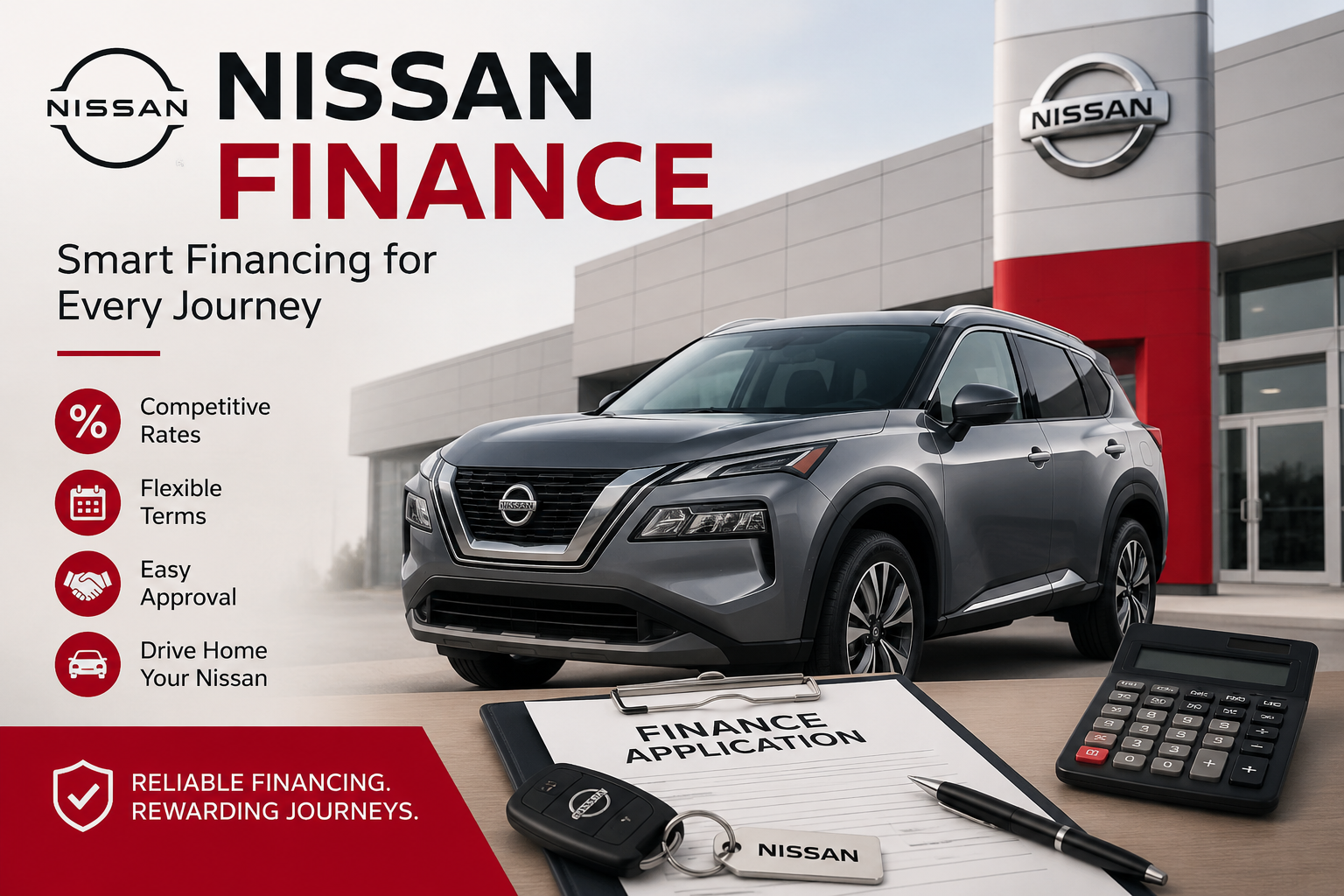
Nissan finance can make purchasing a new or used Nissan more manageable by allowing buyers to spread the cost of a vehicle over a set period rather than paying the full purchase price upfront. Whether you are considering a compact sedan, family SUV, pickup truck, or electric vehicle, understanding how vehicle financing works can help you make a more confident purchasing decision. Financing is more than simply choosing a monthly payment. The interest rate, loan term, down payment, vehicle price, credit profile, fees, taxes, and loan structure can all affect the total amount you eventually pay.
What Is Nissan Finance?
Nissan finance generally refers to the financing options available to customers who want to purchase or lease a Nissan vehicle. Depending on the market and the buyer’s circumstances, financing may be arranged through Nissan’s affiliated financial services operation, a participating dealership, a bank, credit union, or another lending institution.
Instead of paying the entire vehicle price immediately, the customer makes an initial payment and finances the remaining balance. That balance is repaid through scheduled payments, usually with interest added according to the terms of the agreement. The exact financing products, rates, incentives, and eligibility requirements can vary by location, vehicle, credit history, and current promotions.
Why Buyers Consider Nissan Finance
One of the biggest reasons buyers consider Nissan finance is affordability over time. A vehicle can represent a substantial expense, and financing allows the cost to be divided into predictable monthly payments. This can make it easier for households to plan their transportation expenses while keeping some savings available for emergencies or other priorities.
Financing may also provide an opportunity to purchase a vehicle that would be difficult to afford with cash alone. However, affordability should not be judged solely by the monthly payment. A longer loan can reduce the monthly amount while increasing the total interest paid, so buyers should consider both short-term affordability and the overall cost of borrowing.
How Nissan Vehicle Financing Works
The basic financing process is relatively straightforward. A buyer selects a vehicle, negotiates or reviews its purchase price, provides information for a credit application, and receives financing terms from an available lender. If approved, the lender, Nissan Finance the agreed amount, and the buyer repays the loan according to a schedule.
The monthly payment normally consists of part of the principal balance plus interest and may also reflect taxes, fees, warranties, or other financed products. The vehicle generally serves as collateral for an auto loan, meaning the lender has rights related to the vehicle until the loan is satisfied.
Credit Score and Nissan Finance
Credit history can play an important role in determining financing terms. Lenders typically evaluate factors such as credit history, income, existing obligations, payment history, and other information when deciding whether to approve an application and what terms to offer.
Credit score requirements are not universal, and an individual’s complete financial profile can matter more than a single number. Before applying, buyers can review their credit reports for errors and consider whether improving their credit profile could potentially lead to better financing terms.
The Importance of the Interest Rate
The interest rate is one of the most important numbers in any Nissan finance agreement. It determines how much the borrower pays for the privilege of using the lender’s money. Even a seemingly small difference in the annual percentage rate can become significant over several years.
Buyers should therefore compare annual percentage rates rather than focusing only on monthly payments. Promotional financing may sometimes offer particularly attractive rates to qualified customers, but eligibility, vehicle selection, term length, and other conditions may apply.
Understanding Loan Terms
The loan term refers to how long the borrower has to repay the financed amount. Common auto loans can have terms ranging from a few years to longer periods, depending on the lender and market. A shorter term generally produces higher monthly payments but can reduce the amount of interest paid over the life of the loan.
A longer term usually produces lower monthly payments, but the borrower may pay interest for more years. Choosing the right term requires balancing monthly affordability with the total cost of financing. Buyers should avoid selecting an unusually long term simply because it produces a more comfortable monthly payment.
Down Payments and Nissan Finance
A down payment is the amount paid toward the vehicle at the beginning of the transaction. Putting money down can reduce the amount that needs to be Nissan Finance, which may lower the monthly payment and potentially reduce total interest charges.
The appropriate down payment depends on the buyer’s financial situation, vehicle price, available savings, and financing terms. However, buyers should also avoid using so much cash for a down payment that they have no emergency savings left. A balanced approach can help maintain financial flexibility while reducing the amount borrowed.
Trade-Ins and Financing
Trading in an existing vehicle can also influence a Nissan finance transaction. The trade-in value is generally applied toward the purchase, reducing the amount that needs to be financed. However, buyers should understand whether their current vehicle has an outstanding loan.
If the vehicle is worth more than the remaining loan balance, the difference may provide positive equity that can contribute toward the next purchase. If the vehicle is worth less than the outstanding balance, there is negative equity, which can complicate the transaction.
New Nissan Financing Options
New Nissan vehicles may sometimes be available with special financing programs or manufacturer-supported incentives. These offers can change over time and may apply only to particular models, trims, regions, or customer qualifications. Some promotional programs may provide a lower interest rate, while others may offer alternative incentives.
Buyers should compare the complete offer rather than assuming the advertised promotion is automatically the cheapest option. A low promotional rate can be valuable, but the final decision should also consider vehicle price, loan term, fees, required down payment, and any incentives that may be forfeited when choosing a particular financing arrangement.
Used Nissan Financing
Used Nissan vehicles can provide another route for buyers who want to reduce their purchase price. Financing a used vehicle works similarly to financing a new vehicle, although the available rates and terms may differ. The age, mileage, condition, model, and value of the vehicle can influence financing eligibility.
Used vehicles may have lower purchase prices, but buyers should also consider maintenance history, expected repair costs, insurance, and remaining useful life. A lower monthly payment does not necessarily mean a lower overall ownership cost. Evaluating the vehicle and financing together provides a more realistic picture of affordability.
Nissan Finance Versus Paying Cash
Paying cash eliminates the need to borrow and therefore avoids loan interest, but financing can offer advantages for buyers who prefer to preserve their savings. Someone with enough cash to purchase a vehicle may still choose financing if the available loan terms are attractive and they want to maintain liquidity.
On the other hand, a buyer who can comfortably pay cash may prefer the simplicity of owning the vehicle without a monthly loan obligation. The better choice depends on the individual’s financial circumstances, available interest rate, savings goals, and comfort with debt. There is no universal answer that makes financing or paying cash best for every buyer.
Is Nissan Finance Right for You?
Whether Nissan finance is appropriate depends on your personal budget, credit profile, savings, transportation needs, and long-term plans. Financing can provide convenient access to a vehicle without requiring the entire purchase price upfront, but borrowing also creates a long-term financial obligation.
The strongest financing decision is one that remains comfortable even when unexpected expenses occur. Buyers should consider not only whether they can make today’s payment but also whether they can comfortably maintain the payment throughout the entire loan period. A sensible vehicle purchase should support financial stability rather than put excessive pressure on it.
Final Thoughts
Nissan finance can be a useful way to spread the cost of purchasing a Nissan vehicle, but the best financing decision requires more than finding a payment that fits today’s budget. Interest rate, loan term, down payment, credit profile, vehicle price, trade-in equity, fees, and total repayment cost all deserve attention.
Whether choosing a new or used Nissan, financing or leasing, the goal should be a transaction that matches both transportation needs and long-term financial comfort. Taking a thoughtful approach before signing can make the entire vehicle-buying experience clearer, more predictable, and easier to manage.
Also Read Here: Pixelspinx com


1 thought on “Nissan Finance Explained: Smart Ways to Fund Your Next Car”