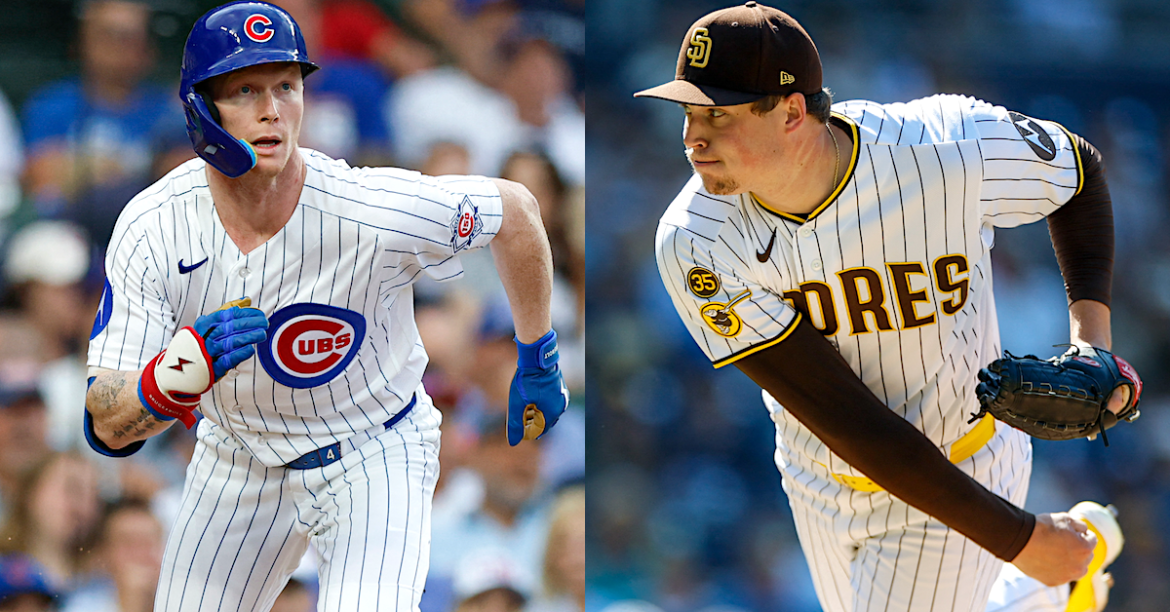
The Chicago Cubs vs Padres match player stats reveal how individual hitting performances, pitching efficiency, defensive execution, and timely run production can determine the outcome of a Major League Baseball matchup. When Chicago faces San Diego, the contest often attracts attention because of the Cubs’ powerful offensive lineup and the Padres’ ability to combine disciplined hitting with an effective bullpen. Their 2026 National League Wild Card Series provided a clear example of that contrast, as San Diego defeated Chicago 8–0 in Game 1 and 4–1 in Game 2 to complete a two-game sweep.
Nico Hoerner’s Contribution to the Cubs’ Offense
Nico Hoerner was one of Chicago’s most productive hitters in the September 30 game, recording two hits in four at-bats and driving in the Cubs’ only run. His performance offered a bright spot in an otherwise difficult offensive outing. While the Cubs struggled to create consistent pressure against San Diego’s pitching staff, Hoerner managed to find openings and deliver a meaningful contribution.
Hoerner’s performance also illustrates why player statistics should be interpreted in the context of the entire game. Two hits can represent a strong individual result even when the team loses. However, a productive hitter needs support from teammates to turn isolated opportunities into multiple runs.
Pete Crow-Armstrong’s Struggles at the Plate
Pete Crow-Armstrong entered the postseason as one of the Chicago Cubs vs Padres match player stats most important offensive and defensive players. His combination of power, speed, and center-field defense made him a major part of the Cubs’ overall identity during the 2026 season. However, the Wild Card Series proved challenging for the Chicago outfielder.
A hitter’s value cannot be judged solely by a short postseason stretch. Regular-season production, defensive range, baserunning, and the ability to influence innings remain important parts of the evaluation. At the same time, postseason statistics matter because a small number of games can determine whether a team advances.
Alex Bregman and the Chicago Batting Lineup
Chicago depended on its established hitters to create scoring opportunities, move runners into position, and deliver extra-base hits when the game demanded them. Bregman’s presence offered experience and a disciplined approach, but the Padres’ pitching staff limited the effectiveness of Chicago’s lineup throughout the two-game series.
Taking pitches can help a batter earn walks and force a pitcher to work deeper into an outing, while attacking a hittable pitch can create immediate scoring opportunities. Against San Diego, the Cubs struggled to translate their offensive potential into a sustained attack.
Individual batting statistics should therefore be assessed alongside on-base production, strikeouts, walks, and runners left on base. A player may make solid contact without producing a hit, while another may generate an important RBI with a single swing.
Gavin Sheets Delivers the Decisive Home Run
Gavin Sheets delivered one of the most important offensive moments of Game 2 when he entered as a pinch hitter and launched a two-run home run. He finished the game 1-for-1, scored once, and recorded two RBIs. His contribution demonstrated how a player outside the starting lineup can become the decisive figure in a postseason contest.
Pinch hitting requires a different preparation process from starting a game. A reserve hitter may have to remain mentally engaged for several innings before receiving an opportunity, often against a reliever who can challenge him with high-quality pitches. Sheets took advantage of his chance and produced a home run that helped San Diego establish a comfortable lead.
Xander Bogaerts and San Diego’s Offensive Production
Xander Bogaerts was among the Padres players who contributed to the team’s ability to create scoring opportunities during the series. San Diego did not need every hitter to produce multiple hits in Game 2. Instead, the team benefited from collecting enough timely contributions to turn its eight hits into four runs.
Bogaerts’ role in the lineup reflects the importance of experienced hitters who can help maintain pressure on opposing pitchers. Even when a player does not deliver the biggest hit of the night, reaching base, advancing runners, and forcing the defense to make plays can contribute to an effective offensive inning.
San Diego’s overall approach was more effective than the Chicago Cubs vs Padres match player stats in the deciding game. The Padres created enough offense to build a lead, then allowed their relievers to control the remaining innings. This balance between offensive execution and pitching depth helped explain the final four-run result.
Jackson Merrill and Ty France in the Padres Lineup
Jackson Merrill and Ty France were also among the San Diego hitters who helped the Padres produce important hits during their postseason matchup with Chicago. Their contributions formed part of a broader team effort in which San Diego did not depend exclusively on one star player to generate offense.
The broader lesson from the series is that a lineup can succeed without every batter recording a standout statistical performance. San Diego combined timely hitting with effective pitching, allowing individual contributions to accumulate into a winning result. Chicago, by comparison, struggled to connect its isolated offensive opportunities into sustained rallies.
Matthew Boyd’s Performance in Game 1
Chicago’s Game 1 defeat set the tone for the Wild Card Series. On September 29, San Diego won 8–0, collecting 13 hits while holding the Cubs to three hits. Matthew Boyd took the loss after starting for Chicago, while Michael King earned the win for the Padres.
Boyd faced a difficult assignment against a Padres lineup that found opportunities to produce extra-base hits and score runners. When an opposing offense establishes an early lead, a starting pitcher must avoid allowing the game to become a succession of scoring innings.
For the Cubs, the larger problem was that the offense did not provide a response. Three hits and no runs left little margin for error, regardless of the pitching changes Chicago made later in the game. The opening loss also increased the importance of Game 2, where the Cubs needed a stronger all-around performance to keep their postseason hopes alive.
Kevin Gausman’s Game 2 Pitching Numbers
Kevin Gausman started for Chicago in Game 2 but took the loss as San Diego secured a 4–1 victory. The Cubs allowed the Padres to score twice in the second inning and twice more in the fourth, creating a deficit that proved difficult to overcome. Chicago scored its only run in the fourth inning and was unable to add another during the remainder of the contest.
Gausman’s outing illustrates how the timing of runs can be just as important as the total. Allowing four runs does not necessarily eliminate a team’s chances of winning, but conceding multiple runs in separate innings can put the offense under sustained pressure. Chicago Cubs vs Padres match player stats needed its hitters to respond quickly, yet San Diego’s pitching staff prevented a comeback.
Bradgley Rodriguez and the Padres Bullpen
Bradgley Rodriguez played an important role in San Diego’s Game 2 victory, earning the win after pitching 1.2 innings without allowing a hit or an earned run while recording two strikeouts. His appearance was a significant example of how relief pitching can change the direction of a postseason game.
Relievers often face high-pressure situations in October because managers must make decisions based on individual matchups, pitch counts, and the possibility of a scoring threat developing quickly. Rodriguez’s ability to record outs without allowing a hit gave San Diego valuable stability during the middle innings.
Jason Adam, Adrian Morejon, and Mason Miller were among the relievers involved in shutting down Chicago’s offense. The collective effort was crucial because the Cubs needed multiple runs to return to contention, but San Diego’s pitching staff did not allow the necessary momentum to develop.
Mason Miller’s Role in Closing Out the Game
Mason Miller provided another important part of San Diego’s relief strategy. Known for his power pitching, Miller gave the Padres a reliable option in a high-pressure late-game situation. His presence allowed the team to approach the final innings with a clear objective: protect the lead, challenge hitters with quality pitches, and avoid giving Chicago an opportunity to restart its offense.
A closer’s effectiveness is measured through more than saves alone. Strikeouts, walks, hits allowed, inherited runners, and the ability to finish games under pressure all help explain a reliever’s value. In the postseason, even one baserunner can create tension because the tying run may move into scoring position with a single swing.
Team Hitting Statistics and Offensive Efficiency
The Game 2 team statistics show a clear difference between the two lineups. Chicago Cubs vs Padres match player stats finished with five hits and one run, while San Diego recorded eight hits and four runs. Both teams played error-free defense, meaning neither side benefited from an opponent’s official fielding mistake.
A team can record several singles without scoring if those hits occur in separate innings. Conversely, a home run with runners on base can immediately change the score. Walks, extra-base hits, productive outs, and the ability to advance runners all influence how effectively a lineup turns baserunners into runs.
Chicago’s five-hit performance was insufficient to mount a sustained comeback. San Diego’s eight-hit total, combined with timely power hitting, proved enough to win comfortably. These figures explain why the Padres advanced while the Cubs’ season ended in the Wild Card round.
Pitching Depth and Defensive Execution
A starting pitcher establishes the initial conditions of a game, but the bullpen must maintain control when the starter exits. Managers need relievers who can handle different hitter profiles, work through difficult innings, and protect leads without allowing opposing batters to regain confidence.
San Diego executed that plan effectively during the Wild Card Series. Its pitchers restricted Chicago’s offensive opportunities, and the bullpen delivered the outs required to finish both games. Chicago Cubs vs Padres match player stats: hitters had difficulty adjusting to the succession of pitchers, especially once San Diego moved into a lead.
What the 2026 Matchup Reveals About Both Teams
The 2026 regular season offered a different picture from the postseason results. Chicago finished the regular season with an 89–73 record, while San Diego went 91–71. Chicago had also won five of the six regular-season meetings between the teams, making San Diego’s postseason sweep a notable reversal.
Over 162 games, depth across the lineup and consistent production help determine a team’s record. In a two-game postseason matchup, however, pitching performances, timely home runs, and the handling of a handful of high-leverage situations can have an outsized impact.
For readers comparing Chicago Cubs vs Padres match player stats, the most useful approach is to examine the specific game before concluding either team’s overall quality. A poor postseason performance does not erase an entire season of strong hitting, just as a pair of victories does not mean every San Diego player dominated every statistical category.
Final Thoughts
The Chicago Cubs vs Padres match player stats from the 2026 National League Wild Card Series show how timely offense and bullpen execution can decide a postseason matchup. San Diego won Game 1 by an 8–0 score and followed with a 4–1 victory in Game 2, completing the sweep.
The most important takeaway is that individual statistics become more meaningful when they are considered alongside the game situation. Batting average, hits, RBIs, home runs, strikeouts, earned runs, and innings pitched each reveal a different part of the contest.


1 thought on “Chicago Cubs vs Padres Match Player Stats: Heroes Behind the Score”