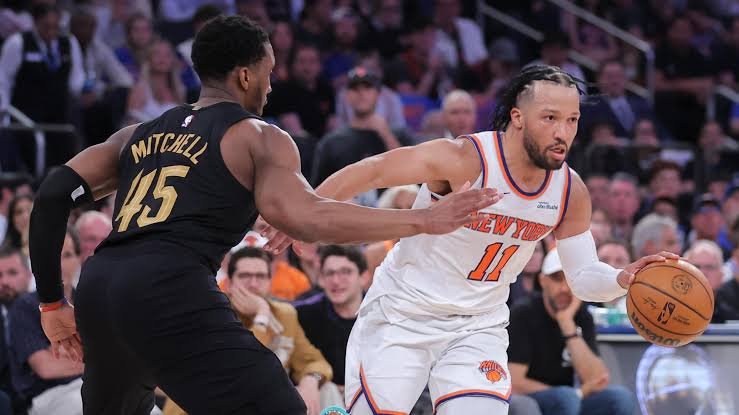
The Cleveland Cavaliers vs Knicks match player stats offer a closer look at how individual performances, offensive efficiency, defensive pressure, and team coordination shape one of the Eastern Conference’s most compelling NBA matchups. Whenever Cleveland meets New York, the contest brings together talented scorers, physical interior players, creative playmakers, and defenses that must respond to several different offensive threats.
Why Cleveland vs New York Is a Matchup Worth Studying
The Cavaliers and Knicks bring different strengths to the floor, making their meetings particularly interesting for basketball fans who follow individual player statistics. Cleveland can build its offense around Mitchell’s ability to create shots, attack defenders, and score from different areas of the court.
New York becomes dangerous when Brunson controls the tempo, Towns draws defenders away from the basket, and the other players turn defensive stops into efficient possessions. The box score helps reveal which team managed these responsibilities more successfully.
Player statistics are also useful because a close contest can be decided by contributions that receive less attention than points. A guard who records several assists can create easy baskets for teammates. A forward who collects offensive rebounds can extend possessions.
Donovan Mitchell’s Scoring Role for the Cavaliers
Donovan Mitchell is one of Cleveland’s most important offensive players because of his ability to create opportunities without needing every possession to begin with a perfectly designed play. He can attack off the dribble, pull up from midrange, threaten defenders beyond the three-point line, and drive toward the basket when opponents overcommit to protecting the perimeter.
In the May 23, 2026, Eastern Conference Finals game, Mitchell finished with 23 points, shooting 9-for-21 from the field and making three of his ten three-point attempts. He also recorded four assists and three steals. His scoring kept him among Cleveland’s leading offensive contributors, while his defensive activity showed that his influence extended beyond shooting.
Jalen Brunson’s Impact on the Knicks’ Offense
Jalen Brunson is central to New York’s offensive identity because he combines ball control, scoring creativity, and the ability to make decisions under pressure. His individual numbers usually attract attention, but his influence also appears in the quality of shots created for teammates.
When reviewing Brunson’s statistics, points and assists should be considered together. A high scoring total demonstrates his ability to finish possessions, while assists provide evidence of his contribution to the wider offense. Field-goal attempts, free throws, and turnovers help explain how efficiently he managed the ball.
Brunson’s ability to control the pace can become especially important when Cleveland tries to create pressure with its perimeter defenders. If he recognizes a defensive mismatch early, he can attack before help arrives. If the Cavaliers collapse toward the basket, he can move the ball to teammates in better positions.
Evan Mobley’s Contribution in the Frontcourt
Evan Mobley gives Cleveland a versatile frontcourt presence capable of contributing on both ends of the floor. His length, mobility, and ability to finish around the basket make him an important scoring option, while his defensive responsibilities can include contesting shots, protecting the paint, switching onto smaller players, and helping teammates recover when an opponent breaks through the first line of defense.
The most useful statistics for evaluating Mobley include points, rebounds, blocks, steals, shooting percentage, and personal fouls. Rebounds indicate his work securing possessions, while blocks and contested shots help illustrate his defensive presence. Field-goal percentage can show whether he is converting opportunities efficiently, particularly when Cleveland creates close-range chances through drives or pick-and-roll actions.
Karl-Anthony Towns and His All-Around Value for New York
Karl-Anthony Towns adds another dimension to the Cleveland Cavaliers vs knicks match player stats offense because he can score near the basket while also stretching the floor with his outside shooting. His presence creates difficult decisions for opposing big men. If a defender stays close to the rim, Towns can move outside and create space for teammates.
Rebounds reveal his work on the glass, assists show his passing contribution, and three-point accuracy indicates how effectively he stretches the defense. His turnovers and personal fouls also deserve attention, particularly when he faces a physically demanding frontcourt such as Cleveland’s.
He made four of nine field-goal attempts and converted his only three-point basket on three attempts. Although his scoring total was lower than those of several teammates, his seven assists demonstrated the importance of his passing. He helped connect different parts of New York’s offense instead of relying entirely on individual scoring.
OG Anunoby and Mikal Bridges Provide Two-Way Support
OG Anunoby and Mikal Bridges give New York important options on both offense and defense. Their contributions are not limited to scoring because both players can defend different positions, challenge passing lanes, and make opponents work for their shots. Their ability to support Brunson also prevents the Knicks from becoming too dependent on one primary creator.
Anunoby’s three-point accuracy matters because Cleveland cannot focus all its defensive attention on Brunson when another player is converting perimeter opportunities. If the Cavaliers send help toward the ball handler, Anunoby can punish the rotation with an open shot. When defenders close out aggressively, he can attack the space they leave behind or move the ball to another teammate.
Jarrett Allen’s Interior Presence and Rebounding
Jarrett Allen plays an important role for Cleveland because of his finishing ability, rebounding, and work around the basket. He can provide a dependable target for passes near the rim, create second-chance opportunities, and help the Cavaliers maintain a physical presence against opposing centers.
Allen scored 17 points against the Knicks on May 23, 2026, making seven of nine field-goal attempts. He also collected seven rebounds, including four offensive boards, and converted three of four free throws. His shooting efficiency was a positive for Cleveland, and his offensive rebounds helped the Cavaliers generate additional opportunities.
However, evaluating Allen requires attention to the other side of the matchup as well. New York’s big men and wings can use spacing to draw Cleveland’s interior defenders away from the basket. Allen must decide when to remain close to the rim and when to step out to contest a shooter or help a teammate.
James Harden’s Playmaking and Ball Security
James Harden provides Cleveland with another experienced ball handler capable of creating shots for himself and his teammates. His role involves organizing possessions, reading defensive coverage, and finding scoring opportunities when Mitchell attracts additional attention.
His statistics should be examined through points, assists, shooting efficiency, turnovers, and minutes played. Points indicate his direct scoring production, while assists show how frequently his decisions lead to teammate baskets. Turnovers are particularly important for a primary ball handler because losing possession can erase an otherwise productive offensive sequence and give the opposing team a chance to score in transition.
Three-Point Shooting and Overall Team Efficiency
A team that makes perimeter shots forces the defense to extend its coverage, potentially opening driving lanes and creating more room for interior scorers. Conversely, poor shooting can allow defenders to stay closer to the basket, making it harder to score through drives and post-up opportunities.
Overall field-goal shooting also favored New York. The Knicks converted 43 of 77 attempts, or 55.8 percent, while Cleveland made 42 of 84, or 50 percent. That difference reflected the Knicks’ ability to generate efficient scoring opportunities throughout the contest.
These numbers do not mean that every game between the teams will follow the same pattern. Shooting percentages change from one contest to another, and a team that struggles from long range in one matchup may perform much better in the next.
Assists, Turnovers, and the Battle for Possessions
Assists and turnovers provide a useful picture of how well each team manages the ball. Assists often reflect effective passing and coordinated offense, while turnovers reveal possessions lost through inaccurate passes, offensive fouls, mishandling, or defensive pressure.
New York recorded 27 assists in its 121–108 victory over Cleveland on May 23, 2026. The Cavaliers finished with 22 assists. The Knicks also committed 14 turnovers, compared with Cleveland’s 17. This combination favored New York because it produced more assisted offense while giving away fewer possessions.
Rebounding, Paint Scoring, and Defensive Pressure
Rebounding is one of the most important categories to examine when analyzing a Cavaliers-Knicks matchup. Defensive rebounds end an opponent’s possession, while offensive rebounds create additional scoring opportunities. Teams that control the glass can limit second chances and give their own offense more opportunities to build momentum.
Paint scoring also tells an interesting story. Cleveland recorded 46 points in the paint, exceeding New York’s 42. Despite that advantage, the Cavaliers lost by 13 points. Their stronger interior scoring was not enough to compensate for New York’s overall shooting efficiency, transition production, and lower turnover total.
Defensive pressure must therefore be evaluated as a collective effort. A center may protect the rim effectively, but the defense can still struggle if perimeter players allow open jump shots. A guard may produce several steals, but those plays will not guarantee success if the team gives up offensive rebounds or fails to convert its own scoring chances.
What the May 23, 2026, Box Score Reveals
The final box score from this Eastern Conference finals contest provides a clear snapshot of the players who influenced the result. Brunson led New York with 30 points, Bridges added 22, and Anunoby scored 21. Towns contributed 13 points and seven assists, while Josh Hart recorded 12 points and nine rebounds.
Cleveland received 24 points from Mobley, 23 from Mitchell, 19 from Harden, and 17 from Allen. Max Strus added 13 points and six assists. The Cavaliers had several productive individual performances, particularly from Mobley and Allen inside the arc. Their challenge was turning that production into a more efficient team performance across all four quarters.
How to Read Player Stats Before the Next Matchup
Anyone reviewing Cleveland Cavaliers vs Knicks match player stats should begin by identifying the exact game date. Mixing numbers from separate contests can lead to incorrect conclusions, so the date and final score should always be confirmed before discussing individual performances.
Assists and turnovers show how effectively a player manages offensive possessions, while rebounds reveal contributions to possession control. Steals and blocks offer evidence of certain defensive plays, although they cannot fully measure positioning, communication, or the ability to force a difficult shot.
For the clearest analysis, combine individual statistics with the final score, team shooting percentages, turnover totals, rebounding, and quarter-by-quarter scoring. This approach helps distinguish between a player who scores frequently but inefficiently and one who makes a broader contribution to winning basketball.
Final Thoughts
The Cleveland Cavaliers vs Knicks match player stats demonstrate how several different elements combine to determine a basketball result. In the May 23, 2026, Eastern Conference Finals game, New York secured a 121–108 victory through efficient shooting, balanced scoring, effective ball movement, and stronger transition production.
Cleveland also had strong individual performances. Mobley led the Cavaliers with 24 points, Mitchell scored 23, and Harden added 19. Allen’s efficient interior scoring and Strus’ contributions further illustrated the team’s offensive options. Nevertheless, lower three-point accuracy, more turnovers, and fewer fast-break points limited Cleveland’s ability to turn individual production into a winning team result.
Also Read Here: Padres vs Phillies match player stats


1 thought on “Cleveland Cavaliers vs Knicks Match Player Stats: Top Scorers and Game-Changers”