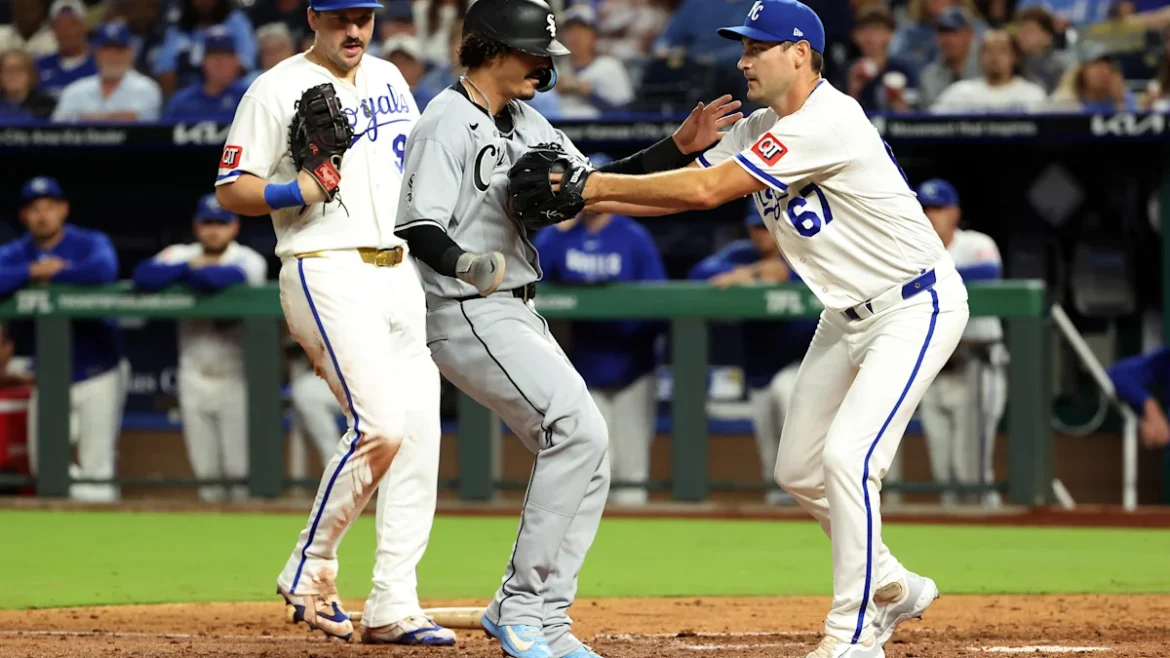
Player stats from the Phillies vs Kansas City Royals match show how hitting consistency, power at the plate, pitching execution, and defense can shape the outcome of an MLB matchup. When the Philadelphia Phillies face the Kansas City Royals, the most useful numbers to examine include runs, hits, runs batted in (RBIs), home runs, strikeouts, walks, and innings pitched. These statistics help explain not only which team won but also which players influenced the game and how momentum changed throughout the contest.
Phillies vs Kansas City Royals Match Player Stats and the Final Score
Philadelphia’s 6–1 July 4 victory clearly showed an offense converting opportunities into runs. The Phillies finished with 12 hits, six runs, and zero errors. Kansas City managed five hits and one run, leaving the Royals with considerably fewer opportunities to build sustained pressure against Philadelphia’s pitching staff.
The scoring pattern also matters when evaluating the box score. Philadelphia broke through with three runs in the fourth inning, then added another run in each of the sixth, seventh, and eighth innings. Kansas City’s only run came in the fourth. Rather than depending on one late rally, the Phillies continued adding to their advantage as the game progressed.
A batter can deliver a home run or an RBI single, but a team’s final result also depends on getting runners on base, advancing them into scoring position, limiting defensive mistakes, and preventing the opposition from responding. The Phillies did those things more effectively in this particular game.
J.T. Realmuto’s Power at the Plate
J.T. Realmuto was one of the key contributors to Philadelphia’s July 4 win. His two-run home run against Michael Wacha helped the Phillies open a comfortable lead in the fourth inning. The homer was particularly important because it turned Philadelphia’s early scoring opportunity into a two-run advantage and put additional pressure on the Kansas City pitching staff.
Realmuto’s contribution illustrates why home runs and RBIs are important components of the Phillies vs Kansas City Royals match player stats. A home run with runners on base can change the scoreboard immediately, whereas a single might require additional hits or baserunning to produce the same number of runs. His ability to drive in teammates made the fourth inning a turning point in the game.
Gabriel Rincones Jr. Delivers Multiple Important Hits
Gabriel Rincones Jr. made a significant offensive contribution during the July 4 matchup. He hit a solo home run in the fourth inning and later recorded an RBI double in the eighth. Those extra-base hits helped Philadelphia increase its lead from the early stages of the game through the closing innings.
The combination of a home run and an RBI double demonstrates two different ways a batter can generate offense. A home run immediately brings the hitter around to score, while a double can place a runner in scoring position or drive home a teammate already on base.
His performance also highlights the importance of depth in a batting lineup. A team cannot always depend on its most recognizable stars to produce every run. Contributions from players throughout the lineup make an offense more difficult to contain because opposing pitchers must prepare for multiple threats.
Alec Bohm Adds Another Home Run
Alec Bohm extended Philadelphia’s advantage with a solo home run in the sixth inning. The home run gave the Phillies a 4–1 lead and continued a scoring pattern that prevented Kansas City from getting back into the contest. Bohm’s homer was recorded as his 11th of the season at the time of the game.
Home runs are an obvious measure of power, but their value also depends on the game situation. A solo home run increases the score by one run, while a home run with runners on base can create a much larger swing. Bohm’s homer gave Philadelphia an additional cushion, making it more difficult for Kansas City to recover through a single rally.
Trea Turner and Philadelphia’s Offensive Pressure
Trea Turner also featured in several notable moments during the July 4 game. Michael Wacha struck him out in the opening inning, and Kansas City later turned a double play involving Turner during Philadelphia’s fourth-inning attack. Despite those defensive successes, Turner eventually scored in the seventh inning on a wild pitch.
Baseball involves repeated opportunities, and a batter may experience both unsuccessful at-bats and productive moments during the same game. Turner remained part of Philadelphia’s offensive pressure even as the Royals attempted to disrupt the lineup with strikeouts and double plays.
For a complete statistical evaluation, his batting line should be considered alongside runs scored, stolen bases when applicable, and opportunities created for teammates. Those details help explain the wider offensive impact of a player whose value can extend beyond home runs.
Nick Loftin Provides Kansas City’s Key Run
Nick Loftin supplied Kansas City’s scoring highlight in the July 4 contest with an RBI single against Jesús Luzardo in the fourth inning. The hit brought the Royals onto the scoreboard and temporarily reduced Philadelphia’s lead to two runs. However, Kansas City could not turn that opportunity into a sustained comeback.
Loftin’s hit is an example of the importance of situational hitting. An RBI single can be highly valuable when a team has runners in scoring position because it converts an opportunity into an actual run. In a close game, that type of contribution may alter the result. In this matchup, however, Philadelphia continued scoring while the Royals’ offense remained limited.
Jesús Luzardo’s Starting Pitching Performance
Jesús Luzardo earned the win in Philadelphia’s 6–1 victory. His performance was central to the result because he limited Kansas City’s scoring while the Phillies’ hitters built their advantage. Luzardo entered the matchup in strong recent form, with MLB’s game coverage highlighting a 2.26 ERA over his previous 10 starts.
Pitching statistics require a different approach from batting statistics. For a starting pitcher, innings pitched show how long the player remained in the game, while hits allowed, walks, strikeouts, earned runs, and pitch count help explain how effectively the pitcher controlled opposing hitters.
Luzardo’s ability to limit Kansas City to one run was particularly valuable because it prevented the Royals from matching Philadelphia’s offensive production. When a starting pitcher keeps the opposition from scoring consistently, the offense can approach later innings without needing to respond to a rapidly changing scoreboard.
Michael Wacha and the Royals’ Pitching Challenges
Michael Wacha started for Kansas City in the July 4 game and was charged with the loss. Philadelphia’s fourth-inning scoring burst included Realmuto’s two-run homer and Rincones Jr.’s solo homer, while Bohm added another home run in the sixth. The Phillies ultimately collected 12 hits, making it difficult for Kansas City’s pitching staff to contain the visitors.
Nevertheless, a pitcher’s performance should not be evaluated using the final score alone. Strikeouts, walks, innings pitched, pitch efficiency, and contact quality can help establish whether the main issue was command, missed locations, or an opposing offense making effective contact.
Why the July 5 and July 6 Games Matter
In the July 5 matchup, Kansas City recorded eight hits and five runs, while Philadelphia finished with five hits and two runs. Bobby Witt Jr. and Lane Thomas each scored twice for the Royals, and Salvador Perez drove in two runs. Luinder Avila earned the win, while Aaron Nola was charged with the loss. Alex Lange recorded the save.
The July 6 game was even more dramatic. Kansas City collected 22 hits and scored 15 runs, while Philadelphia recorded 10 hits and scored once. Tyler Tolbert’s five-hit performance was especially notable, with MLB’s game coverage identifying it as the first five-hit game by a Royals player since Hunter Dozier accomplished the feat in May 2022.
Philadelphia’s July 4 win was built on effective pitching and multiple power contributions, while Kansas City’s following victories featured more productive offense. The series shows why a single box score cannot represent the entire rivalry or establish which team will necessarily perform better in a future meeting.
Batting Statistics That Best Explain the Matchup
When reviewing Phillies vs Kansas City Royals match player stats, batting average is a useful starting point, but it does not explain everything. Hits show how frequently batters reached base safely through hits, while runs measure how often players crossed home plate.
On-base percentage adds further context by accounting for hits, walks, and hit-by-pitches. Slugging percentage measures total bases per at-bat and gives additional weight to extra-base hits. Together, these figures help distinguish a player who reaches base consistently from one whose biggest contribution comes through power.
Pitching and Defensive Numbers Behind the Final Result
Pitching and defense are equally important when explaining a final score. Strikeouts indicate how frequently pitchers retire hitters without relying on fielders to complete a play, while walks reveal potential problems with command. Earned runs allowed and innings pitched help show whether a pitcher limited damage and remained effective over an extended outing.
Defensive errors can also create additional opportunities for the opposition. Philadelphia committed no errors on July 4, whereas Kansas City recorded one. Although an error does not automatically lead to a run, defensive mistakes can extend innings, increase pitch counts, and give opposing hitters extra chances to produce.
The Royals’ pitching staff faced the additional challenge of preventing Philadelphia from extending its lead after the fourth inning. The Phillies scored again in the sixth, seventh, and eighth innings, demonstrating the importance of maintaining execution throughout the entire game rather than focusing only on the starting pitcher’s early performance.
What the Phillies vs Royals Player Stats Reveal
The Phillies vs Kansas City Royals match player stats tell a broader story than the final score alone. Philadelphia’s 6–1 victory on July 4 showcased the combined value of Realmuto’s two-run homer, Rincones Jr.’s power and extra-base hitting, Bohm’s solo home run, and Luzardo’s pitching.
The subsequent 5–2 and 15–1 Royals victories also demonstrate the importance of separating individual game analysis from series-wide conclusions. Strong offensive performances, pitching adjustments, and the ability to capitalize on scoring opportunities can change the outcome from one game to the next.
For readers comparing these teams, the most useful approach is to examine the box score alongside the important plays. Hits, RBIs, home runs, strikeouts, walks, innings pitched, and errors each contribute a different piece of information.
Conclusion
The Phillies vs Kansas City Royals match player stats show how individual performances, timely hitting, and effective pitching can determine the outcome of an MLB game. Philadelphia’s 6–1 victory showcased important contributions from J.T. Realmuto, Gabriel Rincones Jr., and Alec Bohm, while Jesús Luzardo helped limit Kansas City’s offensive production.
Ultimately, analyzing batting performance, RBIs, home runs, pitching efficiency, and defensive execution provides a clearer understanding of each team’s strengths and weaknesses. These statistics offer valuable insight into the players who made the biggest impact and the factors that shaped the series.



1 thought on “Phillies vs Kansas City Royals Match Player Stats: Shaped the Final Score”