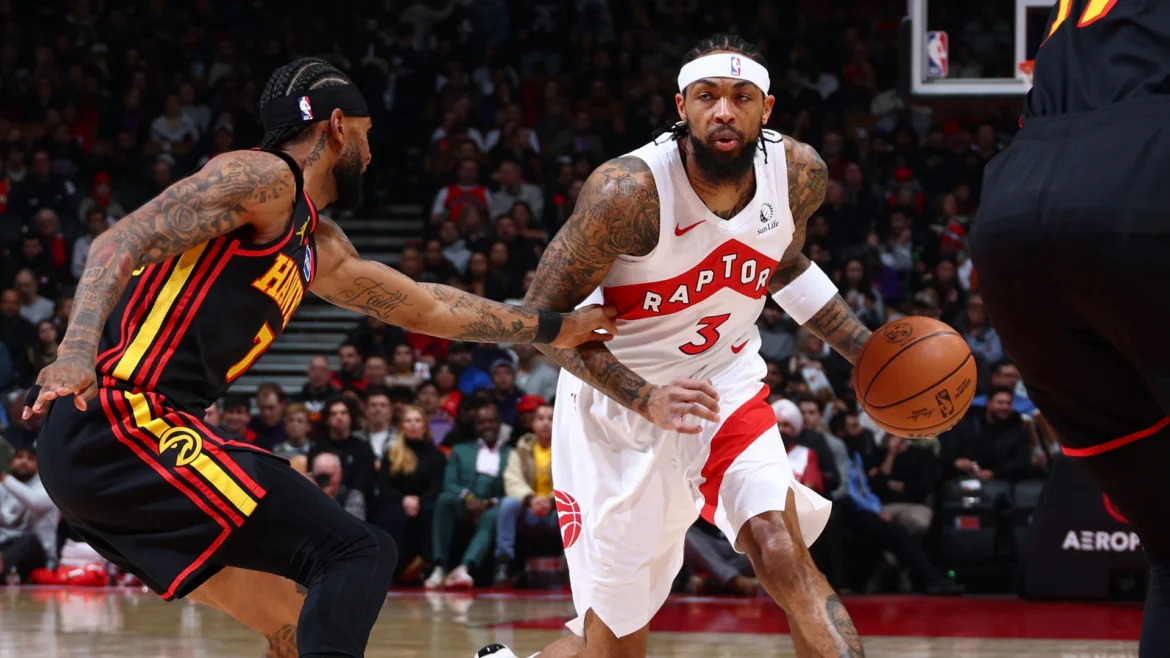
What Toronto Raptors vs Atlanta Hawks Match Player Stats Reveal
Toronto Raptors vs Atlanta Hawks match player stats help explain how individual performances, offensive decisions, defensive pressure, and team coordination shape the outcome of this NBA matchup. Looking beyond the final score gives basketball fans a clearer understanding of which players create scoring opportunities, control rebounds, distribute the ball, and influence the pace of the game.
An accurate statistical breakdown should include points, field-goal percentage, three-point shooting, free throws, rebounds, assists, steals, blocks, turnovers, and minutes played. A guard might lead in assists without scoring the most points, while a center could influence the result through rebounding and rim protection.
How the Raptors and Hawks Approach the Matchup
The toronto raptors vs atlanta hawks match player stats bring different strengths to the court, making their meetings interesting from both a tactical and statistical perspective. Toronto can benefit from attacking the basket, moving the ball between positions, and using defensive pressure to disrupt the opposition’s rhythm.
Atlanta’s offensive identity has often emphasized guard-driven creation, pick-and-roll actions, and spacing that allows shooters to operate comfortably. The Hawks can make a defense work by combining drives, passes to rolling big men, and kick-outs to open shooters.
Toronto Raptors Player Stats and Offensive Production
When examining Toronto’s individual numbers, points scored provide the most immediate indication of offensive production, but they do not tell the entire story. A player who scores consistently while shooting efficiently can be more valuable than one who accumulates points through a large number of difficult attempts.
Toronto’s primary scoring options can influence the matchup by attacking mismatches, creating shots off the dribble, and finishing possessions near the rim. The resulting assists and secondary scoring opportunities can be just as important as the original player’s point total.
The Raptors’ supporting players also deserve attention. Bench scorers, secondary ball handlers, and forwards who contribute through cuts and transition opportunities can change the direction of a game. A balanced scoring distribution makes it more difficult for Atlanta to focus its defensive strategy on one player.
Atlanta Hawks Player Stats and Scoring Efficiency
Atlanta’s player statistics should be assessed through the relationship between scoring, playmaking, and shot selection. A leading scorer may generate points through drives, pull-up jumpers, catch-and-shoot opportunities, or trips to the free-throw line.
Playmaking is another essential part of the Hawks’ statistical profile. Assists show how frequently a player directly sets up a teammate’s made basket, while turnovers reveal possessions lost through mistakes. A ball handler who creates numerous scoring opportunities while limiting turnovers can help Atlanta maintain offensive rhythm.
Points, Field Goals, and Three-Point Shooting Compared
Scoring totals are often the first statistics fans compare after a Raptors-Hawks game, but shooting efficiency provides a more complete picture. Points show the final offensive output, while field-goal attempts indicate how much shooting volume a player needed to produce it.
Three-point shooting can become a decisive factor when either team struggles to score inside. Successful perimeter shots stretch the defense, creating more room for drives and cuts. If Atlanta converts open three-point attempts, Toronto may need to extend its defenders farther from the basket.
Players who attack the basket aggressively can draw fouls, score without needing a made field goal, and put opposing defenders at risk of accumulating personal fouls. Free-throw percentage matters too, particularly in close games when missed attempts can leave valuable points on the scoreboard.
Rebounds and the Battle for Possession
Rebounding statistics reveal which players help their teams gain or retain possession. Defensive rebounds end an opponent’s missed shot and allow a team to begin its next offensive possession. Offensive rebounds provide second-chance opportunities, giving teams another chance to score after an initial attempt fails.
Atlanta can use its rebounding to create extra possessions and prevent Toronto from generating fast breaks. Offensive rebounds are particularly valuable when a team has missed several shots in the same possession, because one successful recovery can lead to a close-range basket or an open perimeter attempt.
Assists, Ball Movement, and Playmaking Impact
Assists help explain how effectively a team creates scoring opportunities through passing. A high assist total may indicate strong ball movement, productive screen actions, and good off-ball positioning. For Toronto, distributing the ball among guards, wings, and interior players can prevent the offense from becoming predictable.
The Hawks can use their playmakers to manipulate defensive coverage and identify favorable matchups. A ball handler who attracts two defenders can pass to a teammate with more space, while a well-timed pass to a rolling center can force the defense to choose between protecting the basket and guarding the perimeter.
A player may make several useful passes that do not become official assists because the recipient misses the shot. Likewise, a low assist total does not necessarily indicate poor playmaking if the player creates advantages through screens, drives, and passes that lead to additional ball movement.
Defense: Steals, Blocks, and Disruptive Plays
Defensive statistics provide another important dimension of the matchup. Steals can reveal active hands, successful passing-lane reads, and pressure on ball handlers. Blocks demonstrate the ability to challenge shots near the basket, although not every effective defensive contest results in a recorded block.
Toronto can benefit from defenders who pressure Atlanta’s guards, navigate screens, and recover quickly when the ball moves toward the perimeter. Disrupting the Hawks’ preferred actions may force them into late-clock attempts or turnovers. When a steal leads to a fast-break basket, its impact extends beyond the defensive statistic itself because it can generate points before the opposing defense is organized.
Turnovers and Their Effect on the Final Result
Turnovers are among the most revealing statistics in any Raptors-Hawks matchup because they represent possessions that end without a shot attempt. Turnovers can also create transition opportunities for the opposition, allowing quick scores before defenders have returned to their positions.
Toronto’s ball handlers must balance aggression with control. Attacking the basket and attempting difficult passes can create opportunities, but poor timing or inaccurate decisions may give Atlanta easy chances to score. The same applies to the Hawks when they try to accelerate the pace or force passes into crowded areas.
The number of turnovers alone does not explain every mistake. Live-ball turnovers that lead to fast breaks can be more damaging than errors that allow the defense to reset. Turnover percentage, points allowed after turnovers, and the opponent’s ability to convert transition opportunities provide more detailed context.
Bench Contributions and Rotation Depth
Bench production can have a major influence on the outcome when starters rest or face foul trouble. Toronto may need its reserves to maintain defensive intensity, provide additional ball handling, and keep the offense productive during rotation changes. Atlanta faces the same challenge, especially if its starting lineup depends heavily on a few primary scorers or playmakers.
Bench points offer a convenient starting point, but a complete assessment should also consider rebounds, assists, defensive plays, turnovers, and shooting efficiency. A reserve who scores fewer points but protects the ball and defends multiple positions may still provide an important contribution. Similarly, a bench scorer who enters the game and quickly converts open shots can change the momentum of a quarter.
Head-to-Head Matchups That Can Shape the Game
Individual matchups often determine which team gains an advantage. Toronto’s perimeter defenders must challenge Atlanta’s ball handlers without giving up easy driving lanes or leaving shooters unguarded. The success of these defensive assignments can be reflected in shooting efficiency, assists, turnovers, and free-throw attempts.
If Toronto’s frontcourt secures defensive rebounds and limits second chances, the Raptors can reduce Atlanta’s opportunities to extend possessions. If Atlanta’s interior players establish position and draw defensive attention, they can create space for perimeter shooters.
Foul trouble can alter these matchups quickly. A key defender who accumulates personal fouls may have to play more cautiously or spend additional time on the bench. That change can open opportunities for the opposing team to attack a weaker defensive matchup.
What the Team Statistics Say About Performance
Individual numbers become more meaningful when connected to team statistics. Field-goal percentage shows how efficiently a team converted its attempts, while three-point percentage measures its accuracy from beyond the arc. Rebounds reveal control of missed shots, assists provide insight into passing and shot creation, and turnovers show how frequently possessions ended through mistakes.
Points in the paint can help explain whether a team established an inside advantage, while fast-break points show how effectively it capitalized on transition opportunities. Second-chance points highlight the value of offensive rebounding. Free-throw attempts can indicate how often players attacked the basket and drew contact. Together, these measurements offer a fuller picture than the final score alone.
How to Read the Official Player Box Score
The official NBA box score is the most reliable source for exact Toronto Raptors vs Atlanta Hawks match player stats. It identifies the players who appeared in the game and records their minutes, points, field goals, three-pointers, free throws, rebounds, assists, steals, blocks, turnovers, and personal fouls.
Game-specific details matter because rosters, rotations, injuries, and minutes can change from one meeting to another. If an article discusses a specific game, its score, date, leading scorers, and individual statistics should all be checked against the corresponding box score.
Readers should also distinguish between actual game statistics and general tactical analysis. Descriptions of how Toronto might use defensive pressure or how Atlanta might generate open shots explain the matchup, but they are not proof that those events occurred in a particular game.
Final Thoughts
Toronto Raptors vs Atlanta Hawks match player stats offer a detailed way to understand the matchup beyond its final result. Points and shooting percentages explain scoring efficiency, rebounds show control of possession, assists reveal playmaking, and steals, blocks, and turnovers help illustrate defensive pressure and ball security.
A leading scorer may attract defensive attention that benefits teammates, a rebounder may create additional possessions, and a playmaker may improve the offense without leading in points. To publish a fully accurate game recap, confirm the specific matchup and its official box score, then use the verified player totals to identify the leading performers and explain how their contributions influenced the result.
Also Read Here: Cleveland Cavaliers vs Knicks match player stats