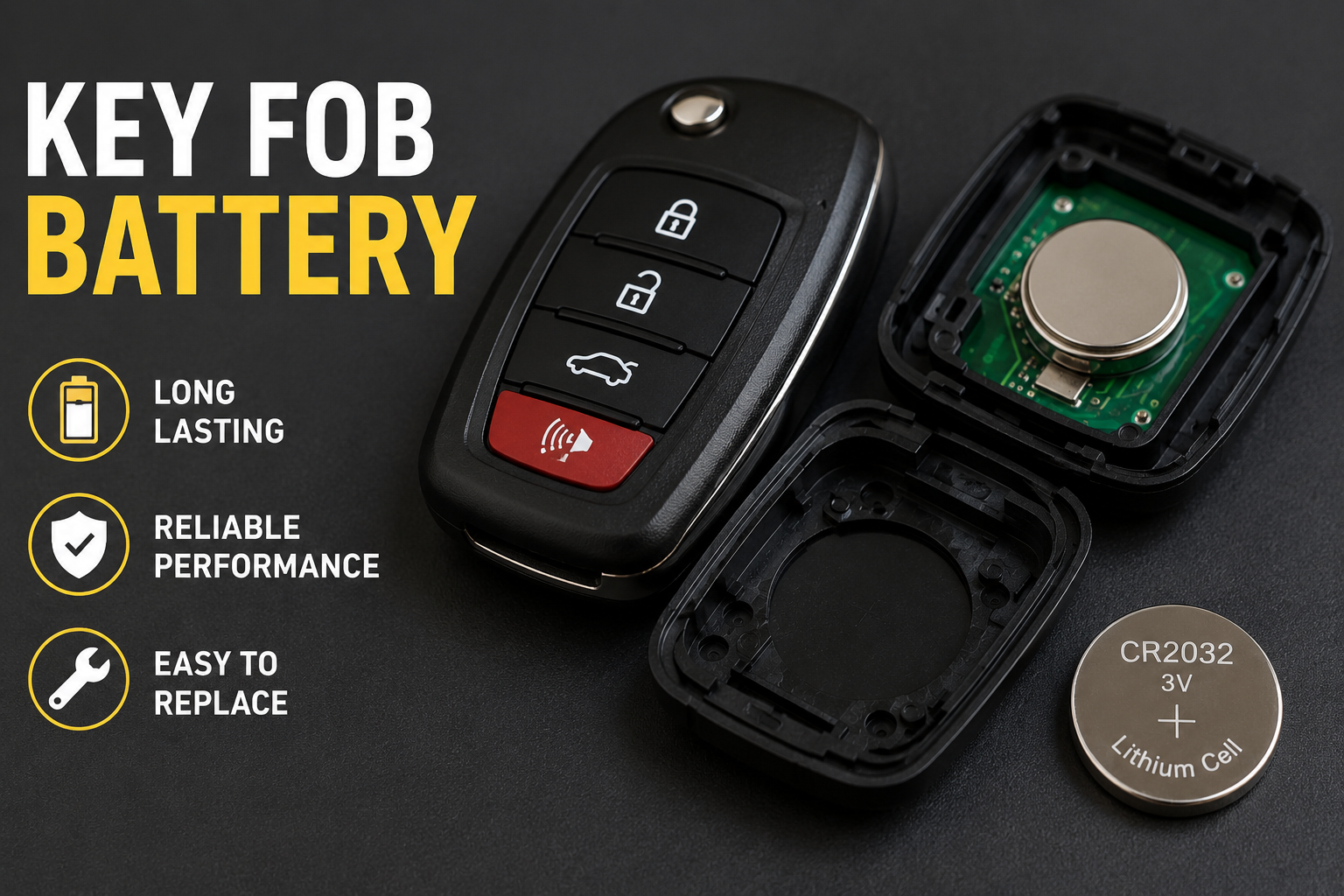
A key fob battery may be one of the smallest components in a modern vehicle, but it plays an important role in everyday convenience. From locking and unlocking doors to starting a vehicle with a push-button ignition, a key fob allows drivers to control several functions without physically inserting a traditional key into the door or ignition. When the battery becomes weak, the remote may respond slowly, work only from a short distance, or stop responding altogether. Understanding the basics of a key fob battery can help vehicle owners recognize warning signs, choose the correct replacement, and avoid unnecessary problems.
What Is a Key Fob Battery?
A key fob battery is a small power source that supplies electricity to the electronic components inside a vehicle’s remote key. Most modern key fobs use compact lithium coin-cell batteries because they are lightweight, widely available, and capable of providing stable power for a long period. The battery powers the transmitter that communicates wirelessly with the vehicle.
Depending on the design of the vehicle and key fob, the same battery may support buttons for locking, unlocking, opening the trunk, activating a panic alarm, or communicating with a keyless entry and push-start system. When the battery loses sufficient charge, the electronic transmitter can no longer communicate reliably with the vehicle.
Why the Key Fob Battery Matters
Modern vehicles depend heavily on electronic communication between the key fob and the vehicle’s security system. A healthy key fob battery allows the remote to transmit signals consistently whenever a button is pressed or when the vehicle detects the fob nearby. A weak battery can reduce the effective range and make the remote unpredictable.
In some vehicles, a low battery warning appears on the dashboard or information display before the key stops functioning completely. Replacing the key fob battery at the right time can therefore prevent inconvenience, particularly when traveling, parking in unfamiliar locations, or relying on keyless starting.
Common Signs of a Weak Key Fob Battery
One of the earliest signs of a weak key fob battery is reduced operating range. A remote that previously worked from across a parking lot may need to be much closer to the vehicle before it responds. Another common symptom is inconsistent button operation. You might press the lock button several times before the vehicle responds, while the unlock button may work normally.
Some key fobs may also trigger a low-battery warning inside the vehicle. If several functions begin failing at the same time, the battery is often the first component worth checking. However, problems can also result from damaged buttons, electronic faults, interference, or vehicle-side issues.
How Long Does a Key Fob Battery Last?
The lifespan of a key fob battery varies depending on the vehicle, battery quality, frequency of use, and design of the remote. Many coin-cell batteries can operate for several years under normal conditions, but there is no universal replacement interval that applies to every vehicle. Drivers who frequently use their remote may consume battery power faster than someone who rarely presses the buttons.
Temperature can also influence battery performance. Extremely cold or hot conditions may temporarily reduce the battery’s effectiveness. Instead of replacing a battery strictly according to a calendar, it is generally better to pay attention to changes in range, responsiveness, and any low-battery warnings.
How to Find the Correct Key Fob Battery
Finding the correct key fob battery usually begins with identifying the existing battery. Carefully opening the remote can reveal the battery number printed on its surface. The vehicle owner’s manual may also provide the recommended battery type and replacement instructions. Some manufacturers provide information through official service documentation or vehicle-specific guides.
If the battery number is difficult to read, the key fob’s model or vehicle model year can help narrow down the possibilities, but the exact specification should still be confirmed before installation. This simple verification step can prevent wasted time and potential damage to the remote.
How to Replace a Key Fob Battery
Replacing a key fob battery is often a straightforward process that takes only a few minutes. Begin by finding the seam or designated opening point on the key fob housing. Some remotes have a small slot designed for a flat tool, while others may require a particular method of separation. Open the housing carefully to avoid damaging plastic clips or electronic components.
Once the old battery is exposed, observe its orientation before removing it. Most coin cells have a positive and negative side, and installing the new battery backward can prevent the remote from working. Insert the replacement battery in the same orientation as the original, close the housing securely, and test each button.
Why Battery Orientation Is Important
Coin-cell batteries have two distinct terminals, and electronic key fobs are designed for a specific polarity. The side marked with a plus sign is normally the positive terminal. Before removing the old battery, take a moment to observe which side faces upward or contacts the holder.
Installing the replacement incorrectly may result in no response from the remote. Although reversing the battery does not necessarily damage every key fob, repeatedly forcing or manipulating the battery holder can cause unnecessary problems. A quick visual check before removal can make installation much easier.
Tools Needed for Replacement
Most key fob battery replacements require very few tools. Depending on the design, a small flat-head screwdriver, plastic pry tool, or similar suitable instrument may help separate the housing. Some modern remotes include a mechanical key that can be removed and used to open a designated slot.
It is best to use a tool that fits the opening properly rather than forcing a large screwdriver into a narrow seam. Excessive pressure can scratch the housing or break internal clips. Working slowly and carefully is usually more important than having specialized equipment.
Handling a Coin-Cell Battery Safely
Coin-cell batteries should be handled carefully. Avoid bending, crushing, puncturing, or deliberately short-circuiting a battery. Keeping the battery away from children and pets is particularly important because small button and coin batteries can pose serious hazards if swallowed.
Store unused batteries in their original packaging until they are needed, and dispose of depleted batteries through an appropriate battery recycling or collection program where available. When handling the replacement, clean hands and careful positioning can help prevent unnecessary contamination of the battery contacts.
What Happens When a Key Fob Battery Dies?
When a key fob battery completely loses power, the remote buttons may stop operating. In a traditional keyless-entry system, this can mean that the driver must use the physical key to unlock the vehicle. Push-button-start vehicles often include a backup method for detecting a key fob with a weak or dead battery.
The exact procedure varies by vehicle and may involve holding the key fob close to a designated area, touching the start button with the fob, or placing the fob in a specific compartment. Because procedures differ, the owner’s manual is the best source for vehicle-specific instructions.
How to Avoid Being Locked Out
One of the simplest ways to avoid a key fob emergency is to respond to early warning signs. If the remote’s range suddenly becomes shorter or the buttons require multiple presses, do not ignore the problem. Replace the battery before it becomes completely depleted.
Drivers can also learn how to use the mechanical key hidden inside many modern key fobs and familiarize themselves with the vehicle’s emergency starting procedure. These small preparations can turn a potentially stressful situation into a quick and manageable inconvenience.
Frequently Asked Questions About Key Fob Batteries
Many questions about key fob batteries involve compatibility, lifespan, and emergency operation. Drivers commonly ask whether one coin-cell model can replace another, how long a battery should last, and whether the car can start when the remote battery is dead.
The answer depends heavily on the vehicle and key fob design. While CR2032, CR2025, and CR2016 batteries are common, they should not automatically be considered interchangeable. Vehicle-specific instructions should always take priority over general assumptions.
Final Thoughts on Key Fob Battery Replacement
A key fob battery is a small but essential part of modern vehicle ownership. Recognizing symptoms such as reduced range, inconsistent button response, and low-battery warnings can help drivers replace the battery before it fails. Choosing the exact battery specification, installing it with the correct orientation, and handling coin cells safely are simple steps that can keep a remote functioning reliably.
When a replacement does not solve the problem, the issue may involve the key fob’s electronics, battery contacts, programming, or the vehicle itself. With basic awareness and routine attention, maintaining a key fob battery can be an easy part of responsible vehicle care.
Also Read Here: Firefly Petunia



1 thought on “Key Fob Battery Care: Simple Ways to Keep Your Remote Reliable”