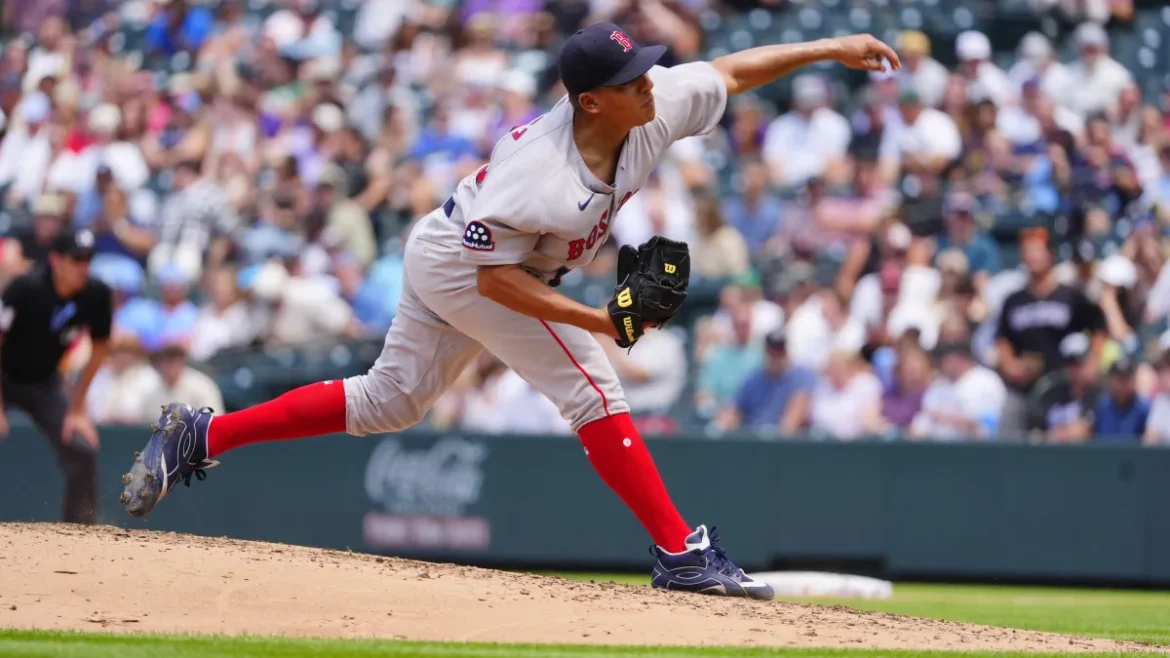
The latest red sox vs colorado rockies match player stats show a game that turned dramatically in Colorado’s favor late. The Rockies defeated the Boston Red Sox 8–6 at Coors Field on June 24, 2026, despite Boston collecting 11 hits and building a 6–3 lead after six innings. Colorado answered with three runs in the seventh and two more in the eighth to complete the comeback. From an individual perspective, Ceddanne Rafaela and Connor Wong were among Boston’s most productive hitters, while Willi Castro, Tyler Freeman, and Cole Carrigg played important roles in Colorado’s comeback.
How the Game Changed After Six Innings
The box score tells an important story about the matchup. Boston scored in five of the first six innings and led 6–3 entering the bottom of the seventh. The Red Sox had 11 hits during that stretch and appeared to have enough offensive production to control the game.
Colorado, however, did not allow the deficit to determine the final result. The Rockies scored three times in the seventh inning and added two runs in the eighth. That late offensive surge transformed a three-run deficit into an 8–6 victory.
The biggest statistical difference came with runners in scoring position. Colorado went 7-for-13 in those situations, while Boston went 3-for-11. That difference helps explain why the Rockies were able to turn their 14 hits into eight runs while Boston’s 11 hits produced six.
Ceddanne Rafaela Provided Boston With a Major Offensive Spark
Ceddanne Rafaela was one of the strongest individual performers for the Red Sox vs colorado rockies match player stats. He went 3-for-5, scored once, drove in a run, and recorded both a double and a triple. His three hits represented a significant portion of Boston’s 11-hit total.
Rafaela’s performance was particularly valuable because his production came in different ways. The extra-base hits demonstrated his ability to create damage beyond simple singles, while his run and RBI contributed directly to Boston’s six-run total.
For a player whose value can extend beyond traditional batting numbers, Rafaela’s performance stood out even more. He combined contact, extra-base production, and run creation in the same game, giving Boston a consistent offensive presence from the middle portion of its lineup.
Connor Wong Delivered Two Important Home-Run Contributions
Connor Wong also had a major impact on Boston’s offense. He finished 2-for-4 with two runs scored, two RBIs, and a home run. His five total bases were the most among Red Sox hitters in the game. Wong’s home run was particularly important because it provided Boston with power in a game where the team needed to keep pressure on Colorado’s pitching staff.
His two hits and two runs also showed that his contribution was not limited to one swing. He was involved in multiple scoring sequences throughout the contest. The combination of two hits, a home run, two RBIs, and two runs made Wong one of Boston’s most complete offensive performers. His production helped compensate for quieter performances elsewhere in the lineup.
Willson Contreras and Boston’s Supporting Hitters
Willson Contreras recorded one hit in four at-bats and drove in a run. Although his individual line was not as productive as Rafaela’s or Wong’s, his RBI contributed to Boston’s ability to build its early lead.
Abraham Seigler also finished with two hits in four at-bats and an RBI. He recorded a double and provided another source of extra-base production. Andruw Monasterio added a hit, scored once, drove in a run, and hit a home run, giving Boston another important power contribution.
Marcelo Mayer went 1-for-2 after entering the game and scored once, while Carlos Narváez added a hit. Together, these contributions explain how Boston reached 11 hits even though several regular contributors were held in check.
Willi Castro Was Central to Colorado’s Comeback
Willi Castro produced one of the best overall hitting performances for the Rockies. He went 3-for-5, scored twice, stole a base, and finished with three total bases. Although he did not drive in a run, his ability to reach base repeatedly helped Colorado create the traffic needed for its late comeback.
Castro’s three hits were tied for the most by any player in the game. His two runs were also important because Colorado needed every scoring opportunity during the seventh- and eighth-inning rally. His stolen base added another dimension to his contribution, showing that his impact extended beyond hitting.
His performance illustrates why a player does not need an RBI or home run to be one of the most influential hitters in a game. Castro consistently reached base and helped keep pressure on Boston’s pitching.
Cole Carrigg Delivered the Biggest RBI Total
His production became particularly meaningful because Colorado needed to convert its late opportunities. The Rockies finished 7-for-13 with runners in scoring position, and Carrigg’s three RBIs were a major part of that efficiency. He also recorded a double, giving him three total bases.
Carrigg did strike out twice, but his ability to deliver when opportunities appeared outweighed those unsuccessful at-bats. His performance is a good example of why RBI context can be useful when evaluating a single-game offensive contribution.
The Rockies Received Contributions Throughout the Lineup
Colorado did not depend entirely on one hitter. T.J. Rumfield went 2-for-5 with an RBI and a double, while Jake McCarthy went 2-for-5 and drove in a run. Troy Johnston provided an important pinch-hit RBI, going 1-for-1 in his lone plate appearance.
Kyle Karros and Mickey Moniak also contributed hits and runs. Karros went 1-for-3 and scored once, while Moniak entered as a pinch hitter and scored after recording a hit. Those contributions were especially valuable because they helped Colorado keep innings alive rather than relying exclusively on the top of the lineup.
Ranger Suárez Was Strong Despite the Final Result
Ranger Suárez turned in an impressive start for Boston. He worked six innings, allowed seven hits and three runs, but only one of those runs was earned. He walked one batter and struck out nine. The nine strikeouts were particularly notable because Suárez limited Colorado’s ability to generate easy contact for much of his outing.
His final pitching line does not tell the full story because Boston’s defense committed two errors, contributing to the difference between his three runs allowed and just one earned run. Suárez therefore left the game in a much stronger position than the final score might suggest.
Boston’s Bullpen Became the Turning Point
The most significant negative development for Boston came after Suárez departed. Tayron Guerrero recorded two outs but allowed three runs, while Danny Coulombe recorded one out without allowing a run. Justin Slaten then surrendered four hits and two runs in the eighth inning.
The contrast between the starting pitching and relief pitching was striking. Suárez gave Boston six innings of strong work, but the bullpen could not protect the three-run lead. For a game decided by only two runs, those late pitching sequences were decisive.
What the Team Statistics Reveal
The red sox vs colorado rockies match player stats show that Colorado’s victory was not simply the result of having more hits. The Rockies also converted their opportunities more effectively. Boston recorded 11 hits, two home runs, and six runs. Colorado produced 14 hits but did not hit a home run.
The difference in runners in scoring position was particularly revealing. Boston went 3-for-11, while Colorado went 7-for-13. That is a substantial gap in situational hitting and was arguably the clearest statistical explanation for the final score.
Why Coors Field Remains an Important Factor
The matchup took place at Coors Field in Denver, a setting historically associated with high-scoring baseball. That context matters when examining offensive statistics because the environment can influence how extra-base hits and scoring opportunities develop.
Still, the individual performances in this game should not simply be dismissed as a product of the ballpark. Boston hitters produced 11 hits, while Colorado collected 14, and both teams generated multiple extra-base hits. The decisive factor was ultimately how each team handled its opportunities.
The Biggest Takeaways From the Player Stats
Looking at the complete statistical picture, Boston’s strongest offensive performances came from Rafaela and Wong. Rafaela’s three-hit game provided consistency and extra-base production, while Wong supplied power with a home run and two RBIs. Seigler, Monasterio, and Contreras also contributed meaningful hits and runs.
For Colorado, Castro was an important table-setter, Freeman delivered timely production, and Carrigg led the team with three RBIs. Rumfield and McCarthy added two-hit performances, while Johnston provided a valuable pinch-hit RBI.
What This Matchup Says About Both Teams
The June 24 game highlighted contrasting strengths. Boston demonstrated that it could generate substantial contact and early offense, but its late pitching execution was a weakness in this particular matchup. Colorado, meanwhile, showed resilience by recovering from a three-run deficit and turning strong situational hitting into a comeback victory.
The red sox vs colorado rockies match player stats ultimately tell the story of a game in which Boston had enough offense to win, but Colorado was better when the most important opportunities arrived. Rafaela, Wong, Castro, Freeman, Carrigg, Suárez, Senzatela, and Herget were among the players who shaped the outcome, while the difference in situational hitting and late pitching proved decisive.
Final Thought
The red sox vs colorado rockies match player stats produced the kind of game where individual performances mattered just as much as the final score. Boston showed plenty of offensive strength through timely hitting and extra-base production, while Colorado responded with greater efficiency when runners reached scoring position.
The late comeback ultimately made the difference, but the player statistics reveal how competitive the matchup was from start to finish. For anyone reviewing the red sox vs colorado rockies match player stats, the biggest lesson is that a strong start and a high hit total are not always enough—execution in the most important moments can completely change the outcome.
Also Read Here: New York Yankees vs white sox match player stats


1 thought on “Red Sox vs Colorado Rockies Match Player Stats: Top Performers Revealed”