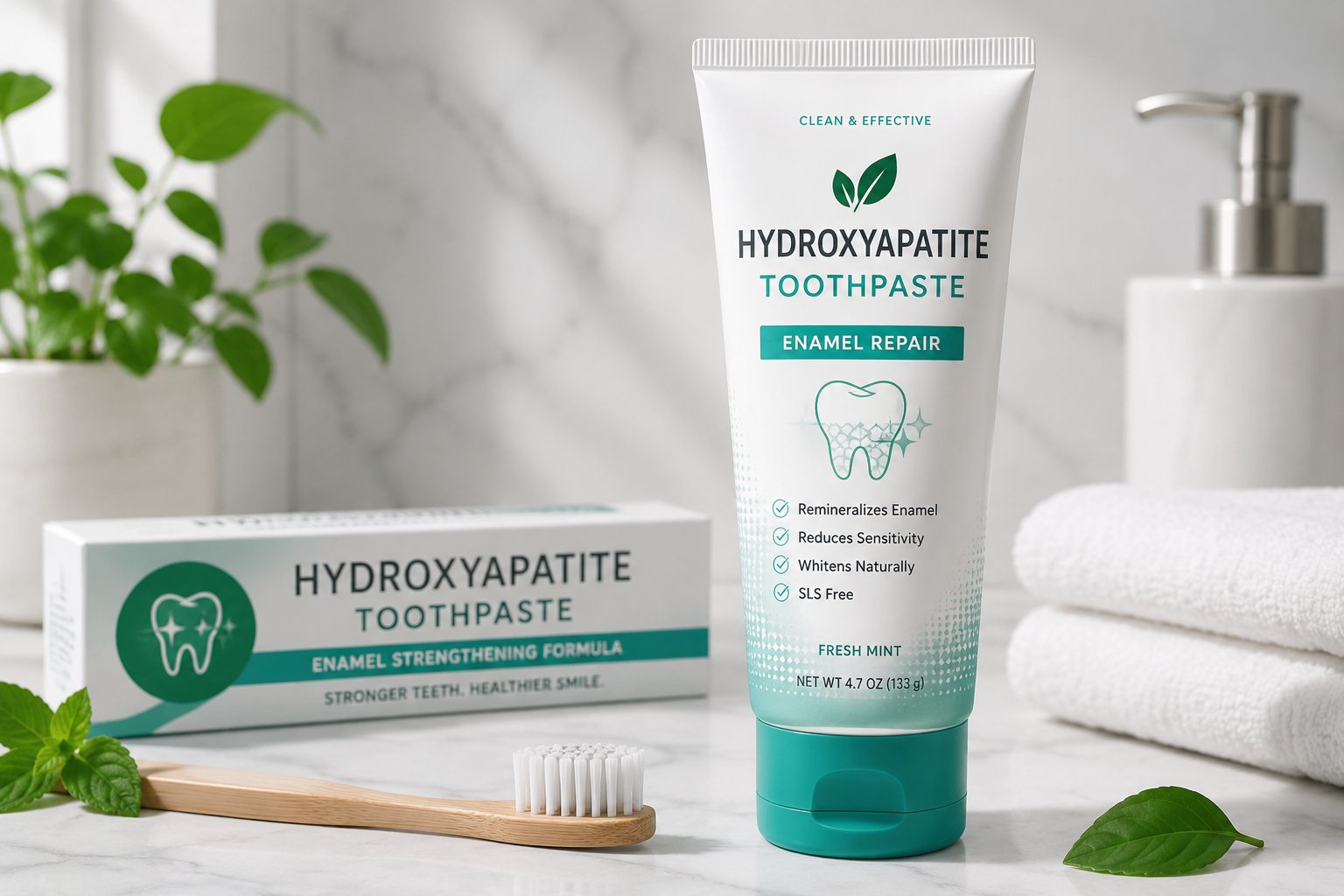
Hydroxyapatite toothpaste has become increasingly popular among people looking for alternatives to conventional fluoride toothpaste. Its growing attention comes from its connection to the natural mineral structure of teeth and bones, making it an interesting ingredient for daily oral hygiene. Rather than simply focusing on cleaning the surface of the teeth, hydroxyapatite toothpaste is commonly promoted for supporting enamel, reducing sensitivity, and helping maintain a smoother tooth surface. As consumers become more interested in ingredient-conscious personal care products, hydroxyapatite has emerged as one of the better-known options in the mineral-based toothpaste category.
Table of Contents
ToggleWhat Is Hydroxyapatite?
Hydroxyapatite is a calcium phosphate mineral that naturally occurs in the human body. It is an important mineral component of bones and teeth, where it contributes to their hardness and structural strength. Tooth enamel contains a high concentration of mineral crystals that are primarily composed of a form of hydroxyapatite.
The term hydroxyapatite can sound highly technical, but the basic concept is relatively straightforward. It is a mineral closely related to the material naturally present in teeth. Manufacturers may use different forms or particle sizes of hydroxyapatite, and the exact formulation can vary considerably from one toothpaste to another.
How Hydroxyapatite Toothpaste Works
The appeal of hydroxyapatite toothpaste largely comes from its potential interaction with tooth enamel. Teeth constantly experience changes in their surrounding environment. Acids produced by oral bacteria and acids from foods and drinks can contribute to mineral loss from enamel. This process is commonly referred to as demineralization. Saliva naturally helps counteract this process by supplying minerals and maintaining conditions that support the teeth.
Hydroxyapatite toothpaste is designed to complement these natural processes. During brushing, hydroxyapatite particles can come into contact with enamel and may deposit on areas of the tooth surface. Research has investigated whether these particles can contribute to remineralization and surface repair. The precise effect depends on the formulation, particle characteristics, brushing habits, and overall oral environment.
Hydroxyapatite and Enamel Support
Enamel is the hard outer layer of the tooth and serves as a protective barrier for the more sensitive structures underneath. Although enamel is extremely hard, it is not completely immune to wear or chemical attack. Acid exposure, poor oral hygiene, certain dietary habits, and other factors can contribute to mineral loss over time.
Hydroxyapatite toothpaste is often discussed in connection with enamel support because hydroxyapatite resembles the mineral naturally found in enamel. Some studies have explored its ability to encourage mineral deposition on tooth surfaces. This has helped establish hydroxyapatite as an interesting ingredient for toothpaste designed around enamel maintenance.
Can Hydroxyapatite Toothpaste Help With Sensitivity?
Tooth sensitivity is another reason consumers explore hydroxyapatite toothpaste. Sensitivity can occur when areas of dentin become exposed or when microscopic pathways allow external stimuli to reach the nerves inside a tooth more easily. Cold drinks, hot foods, sweet products, and even brushing can sometimes trigger a sharp sensation.
Because hydroxyapatite may deposit on the tooth surface, researchers have investigated whether it can help reduce sensitivity by blocking or narrowing pathways associated with dentin exposure. Some hydroxyapatite formulations have shown promising results in studies involving dentin hypersensitivity. The experience can vary from person to person, however, and not every toothpaste will provide identical results.
Hydroxyapatite Toothpaste Versus Fluoride Toothpaste
One of the most common questions surrounding hydroxyapatite toothpaste is how it compares with fluoride toothpaste. Fluoride has a long history in dentistry and is widely recognized for helping prevent tooth decay. It can strengthen enamel and improve its resistance to acid-related mineral loss. Public-health organizations and dental professionals commonly recommend fluoride toothpaste for cavity prevention.
The choice between formulations should therefore be based on individual needs rather than marketing claims alone. Someone with a high risk of cavities may benefit from discussing toothpaste choices with a dentist. A person primarily interested in a fluoride-free option may be attracted to hydroxyapatite toothpaste. The best choice is ultimately the one that fits the individual’s oral-health needs and is used consistently and correctly.
Potential Benefits of Hydroxyapatite Toothpaste
Hydroxyapatite toothpaste may offer several potential benefits, which explains why it has gained attention in the oral-care market. One of the most frequently discussed advantages is its relationship to enamel mineral. Because hydroxyapatite resembles a natural mineral component of teeth, it is considered a logical ingredient for formulas intended to support enamel.
Hydroxyapatite toothpaste may also appeal to consumers seeking fluoride-free oral-care products. This does not automatically mean that fluoride is harmful or unnecessary; rather, it reflects the fact that consumers have different preferences and circumstances. A well-formulated hydroxyapatite toothpaste can provide an alternative approach for people who specifically want to avoid fluoride.
Why Fluoride-Free Toothpaste Appeals to Some Consumers
The popularity of fluoride-free toothpaste has grown alongside broader interest in minimalist and ingredient-focused personal care. Some consumers prefer products with fewer ingredients or choose toothpaste based on personal preferences about specific compounds. Hydroxyapatite provides an alternative active ingredient that allows manufacturers to formulate toothpaste without fluoride.
However, avoiding fluoride should be an informed choice rather than a decision based on fear. Fluoride has substantial evidence supporting its role in reducing dental caries. People who are prone to cavities should be particularly careful when selecting a fluoride-free toothpaste and may want to discuss their options with a dentist.
How to Choose a Hydroxyapatite Toothpaste
Not every hydroxyapatite toothpaste is formulated in the same way. When choosing a product, consumers should examine the ingredient list, the type of hydroxyapatite used, the overall formulation, and the manufacturer’s instructions. Some products use specific forms of hydroxyapatite that have been studied in oral-care applications, while others may provide less information about their formulation.
It is also useful to consider whether the toothpaste contains ingredients that match personal preferences. Some formulas are flavored strongly, while others are designed with milder tastes. Some contain additional ingredients aimed at sensitivity, breath freshness, or stain removal. People with particular dietary, allergy, or ingredient concerns should carefully read product labels.
How to Use Hydroxyapatite Toothpaste Properly
Good brushing technique is just as important as the toothpaste itself. A high-quality formula cannot compensate for brushing too quickly, missing large areas of the mouth, or using excessive pressure. Most people should brush their teeth regularly with a soft-bristled toothbrush and follow dental advice tailored to their needs.
When using hydroxyapatite toothpaste, apply an appropriate amount to the toothbrush and gently brush all accessible tooth surfaces. Pay attention to the gumline, chewing surfaces, and areas that are easily missed. Brushing aggressively is unnecessary and can contribute to gum irritation or enamel wear.
Hydroxyapatite Toothpaste and Daily Oral Hygiene
A successful oral-care routine depends on consistency. Even an innovative toothpaste cannot deliver meaningful benefits if it is used irregularly. Brushing removes plaque and food debris while delivering the toothpaste’s active ingredients to the tooth surface. Regular brushing also helps keep your mouth cleaner and your breath fresher.
Daily habits outside brushing also matter. Frequent sugary snacks, acidic beverages, smoking, poor flossing habits, and inadequate dental care can undermine oral health regardless of which toothpaste is used. A comprehensive approach is more effective than expecting one ingredient to solve every dental concern.
Does Hydroxyapatite Toothpaste Remove Stains?
Many people wonder whether hydroxyapatite toothpaste can whiten teeth or remove stains. Toothpaste can help remove some forms of surface discoloration through gentle cleaning and polishing. However, surface stain removal is different from changing the natural color.
People seeking dramatic whitening should be cautious with aggressive abrasive products. Excessive abrasion can potentially contribute to enamel wear over time. If teeth have deep discoloration or intrinsic staining, professional whitening or dental assessment may be more appropriate than relying on ordinary toothpaste.
The Future of Hydroxyapatite Toothpaste
Interest in hydroxyapatite toothpaste is likely to continue as researchers investigate new applications for biomimetic materials in dentistry. Advances in particle engineering and formulation technology could lead to products designed for more specific purposes, such as sensitivity management, enamel support, or targeted mineral delivery.
At the same time, consumers should remain realistic about what toothpaste can accomplish. No toothpaste can replace professional dental treatment for cavities, fractures, advanced erosion, or gum disease. The future of hydroxyapatite toothpaste will ultimately depend on continued research, transparent labeling, and responsible product development.
Final Thoughts on Hydroxyapatite Toothpaste
Hydroxyapatite toothpaste offers an interesting approach to everyday oral care because its key mineral is closely related to the natural mineral structure of teeth. Research has explored its potential role in enamel remineralization, surface mineral support, and sensitivity management, making it an increasingly recognized ingredient in modern toothpaste formulations.
For consumers, the biggest advantage is having another evidence-informed option to consider when choosing an oral-care product. However, toothpaste should always be viewed as one part of a larger dental-health strategy. Brushing properly, cleaning between teeth, controlling dietary habits, and visiting a dentist when necessary remain essential.
Also Read Here: Adstotally.com



1 thought on “Why Hydroxyapatite Toothpaste Is Becoming a Popular Oral Care Alternative”