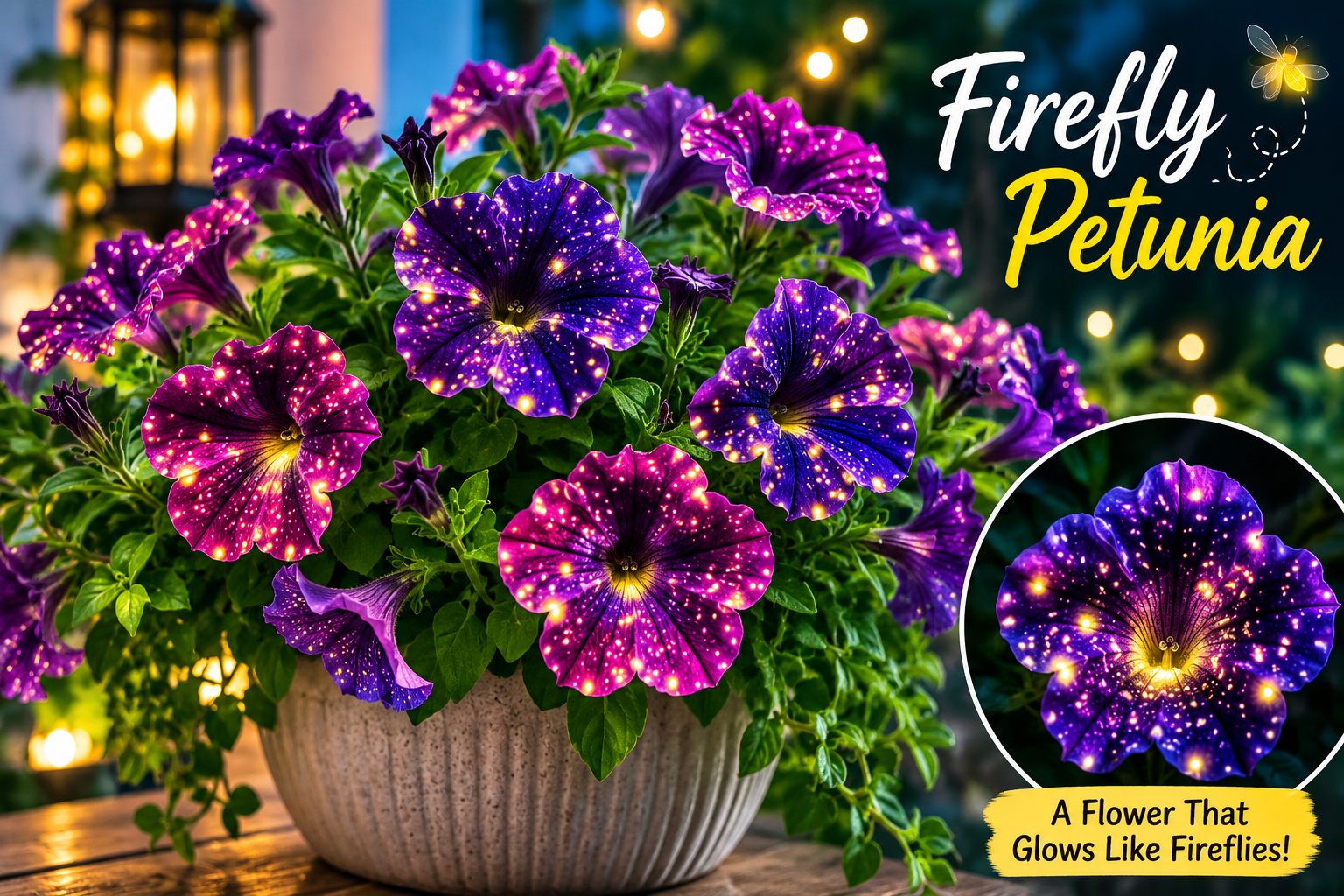
Firefly petunia is a captivating ornamental plant that has attracted attention because of its unusual appearance and intriguing name. Petunias are already among the most popular flowering plants for containers, hanging baskets, borders, balconies, and garden beds, but the firefly concept adds another layer of fascination. When people search for firefly petunia, they may be interested in a particular cultivar, a glowing-flower concept, or the broader idea of plants that create an almost magical nighttime atmosphere.
Table of Contents
ToggleWhat Is Firefly Petunia?
The term firefly petunia is commonly associated with a petunia that has a distinctive nighttime or glowing quality. Traditional petunias are known for their trumpet-shaped flowers and impressive range of colors, including white, pink, purple, red, blue, and combinations of these shades. A firefly-inspired petunia takes that familiar flower and connects it with the visual effect of tiny lights appearing in a garden after sunset.
The name itself evokes fireflies, which naturally makes people imagine a flower with an unusual luminous appearance. However, it’s important to distinguish between marketing language, ornamental characteristics, and genuine biological bioluminescence. Not every plant described with a glowing or firefly-related name literally produces visible light in the darkness.
The History Behind Petunias
To appreciate the interest surrounding firefly petunia, it helps to understand the history of petunias themselves. Petunias belong to the Solanaceae family, which also includes tomatoes, peppers, potatoes, and several other familiar plants. Modern garden petunias trace much of their ancestry to species native to South America. Over generations, horticulturists developed petunias with larger flowers, stronger growth habits, improved weather tolerance, and more dramatic colors.
The plants eventually became popular in gardens worldwide because they are relatively easy to grow and can provide abundant flowers for much of the growing season. This long history of selective breeding demonstrates why petunias are an excellent foundation for experimentation with new ornamental traits.
Why the Firefly Name Is So Appealing
The name firefly petunia immediately creates a mental picture that ordinary plant names may not. Fireflies are associated with warm summer evenings, gardens, forests, and tiny points of light moving through the darkness. Combining that imagery with a colorful flowering plant gives the flower a sense of mystery. Gardeners often seek plants that create memorable experiences rather than simply filling space with greenery.
The name also works well for social media because photographs and videos of unusual plants tend to attract curiosity. In a world where gardening has become increasingly visual, distinctive plant names can play an important role in encouraging people to explore new varieties.
Traditional Petunia Characteristics
Petunias are generally valued for their prolific flowering and versatility. Depending on the type, plants may grow upright or spread outward and trail over the edges of containers. Their flowers usually have a soft, trumpet-like shape and can range from relatively small blooms to large, showy blossoms. Wide varieties perform well in sunny locations and can continue flowering when supplied with suitable moisture, nutrients, and regular maintenance.
These characteristics make petunias particularly useful for gardeners who want a strong display without choosing highly complicated plants. A firefly-inspired variety can therefore be especially attractive because it builds on a familiar and practical garden flower while adding an element of novelty.
Could a Petunia Really Glow?
One of the most interesting questions surrounding firefly petunia is whether a petunia can genuinely produce light. In nature, bioluminescence occurs in organisms such as fireflies, certain fungi, and some marine animals. Bioluminescence is different from fluorescence or ordinary color reflection because it involves a biological process that produces light.
This field has generated considerable interest because glowing plants could eventually have applications in research, education, decorative horticulture, and potentially low-level ambient illumination. However, the visible effect of a particular plant depends heavily on its biological design and growing conditions, so claims about glowing plants should be evaluated carefully rather than assumed from a name alone.
The Science of Plant Bioluminescence
Plant bioluminescence is a fascinating area of biotechnology. In a naturally bioluminescent organism, chemical reactions generate visible light through a biological pathway. Scientists have studied the genes and enzymes involved in these pathways to understand how light production can occur. Researchers have also investigated methods of transferring biological mechanisms into plants.
When successful, such approaches can allow plant tissues to produce detectable light without requiring conventional batteries or electrical components. This does not mean that a glowing plant behaves exactly like a lamp. The intensity may be subtle, and the visible effect can vary by plant, environment, developmental stage, and biological system involved.
How Modern Plant Breeding Creates Novel Varieties
The development of unusual ornamental plants is not new. Gardeners have been selecting plants with desirable traits for centuries. Modern breeding can accelerate this process by combining carefully selected parent plants and evaluating their offspring for characteristics such as flower color, growth habit, disease resistance, and flowering performance.
More advanced biotechnology can introduce or modify traits in ways that conventional breeding cannot easily achieve. When people encounter an unusual plant associated with names such as firefly petunia, they may therefore be seeing the result of decades of horticultural innovation.
Firefly Petunia and the Future of Gardening
The popularity of unusual plants suggests that gardening may increasingly include varieties designed around experiences rather than simple color and form. A plant with an unusual nighttime characteristic could encourage people to spend more time outdoors after sunset.
Plants with distinctive visual effects could be combined with traditional flowers, textured foliage, water features, pathways, and subtle landscape lighting. This approach creates gardens that change character as the day progresses. The firefly petunia concept fits naturally into this broader movement toward sensory and experience-focused garden design.
Choosing the Right Location for Petunias
Petunias generally perform best when they receive plenty of sunlight. A bright location encourages healthy growth and abundant flowering, although extremely intense heat can create challenges in some climates. Gardeners should consider the local weather, seasonal temperatures, and exposure of the planting area.
A location receiving several hours of direct sunlight is usually a strong starting point for many petunia varieties. Good air circulation is also useful because crowded, poorly ventilated plants may be more vulnerable to certain fungal problems. Before planting any specific firefly petunia cultivar, check its individual growing instructions because requirements can differ between varieties.
Growing Firefly Petunia in Containers
Containers are an excellent option for petunias because they allow gardeners to control soil quality, drainage, and placement. A container can also be moved when environmental conditions change. For example, a gardener may reposition a plant to provide more suitable sunlight or protect it from severe weather.
High-quality potting mix can provide a useful balance between moisture retention and drainage. Container-grown plants may require more frequent watering than plants growing directly in the ground because their limited soil volume dries more quickly.
Growing Petunias in Garden Beds
Petunias can also create impressive displays when planted directly in garden beds. Before planting, gardeners should prepare the soil by improving its structure and ensuring that excess water can drain away. Spacing is important because plants need room for air movement and expansion.
A carefully planned bed can combine petunias with foliage plants, ornamental grasses, herbs, or other flowering species. Firefly-themed planting designs can be especially attractive when the surrounding plants have silver, white, or dark green foliage that creates contrast. The goal is to create an environment in which the distinctive qualities of the flowers remain visually noticeable.
Why Firefly Petunia Captures Imagination
The lasting appeal of firefly petunia comes from combining something familiar and something extraordinary. Petunias are common garden favorites, while fireflies represent a magical natural phenomenon. Bringing those ideas together creates a plant concept that encourages people to ask questions.
Is it truly luminous? How was it developed? Can it be grown at home? What does it look like after sunset? These questions demonstrate how a single plant can connect ordinary gardening with modern science and imaginative design. That combination is likely to keep interest in unusual petunia varieties growing.
Final Thoughts on Firefly Petunia
Firefly petunia is a fascinating keyword because it sits at the intersection of horticulture, plant science, garden design, and modern curiosity. Petunias have long been valued for their colorful flowers and flexible growing habits, but the idea of a firefly-inspired plant introduces a completely different dimension.
Whether the term refers to a specific ornamental cultivar, a glowing plant concept, or an emerging example of plant biotechnology, it reflects a broader desire to make gardens more unusual and memorable. For gardeners, the subject offers an opportunity to explore new varieties while remembering the importance of accurate plant information and responsible cultivation.
Also Read Here: 2023 Toyota Tacoma



1 thought on “Firefly Petunia: The Magical Flower That Lights Up Gardens”