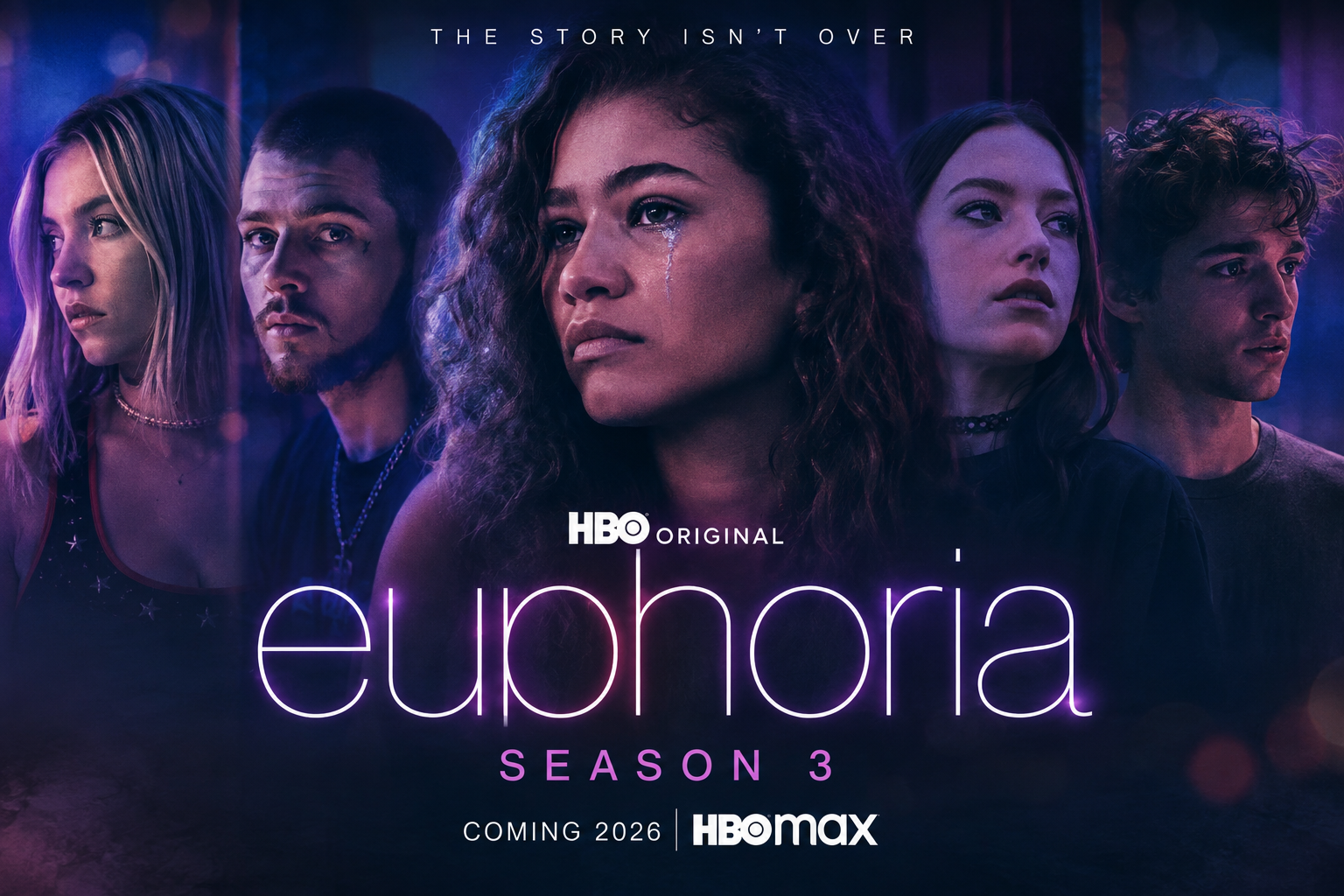
Euphoria season 3 became one of the most anticipated television events because viewers had spent years waiting to discover what would happen to Rue, Jules, Cassie, Nate, Maddy, and the other characters after the emotional chaos of the second season. The HBO drama returned after a lengthy production gap with a significantly different direction, moving beyond the characters’ high-school years and exploring adulthood, faith, redemption, addiction, ambition, relationships, and the consequences of choices made in youth.
The Visual Style Remains One of the Show’s Biggest Strengths
One element that remained unmistakable in Euphoria season 3 was the show’s visual identity. Euphoria has always treated television like a cinematic experience, using dramatic lighting, unusual camera movements, dreamlike imagery, long takes, close-ups, and carefully designed compositions. The visual style often reflects the emotional state of the characters instead of simply showing what is happening.
When a character is overwhelmed, the world around them can feel distorted. When they are emotionally disconnected, the camera may create a sense of distance. This approach makes Euphoria visually different from conventional teen dramas. The third season continued that tradition while giving the story a more mature atmosphere.
Music Continues to Shape the Emotional Experience
Music has always played a crucial role in Euphoria, and Euphoria season 3 continued to treat the soundtrack as part of the storytelling rather than simple background decoration. The series became known for combining contemporary songs with original compositions that could transform ordinary scenes into emotional set pieces.
Labrinth’s work helped establish the sound of the earlier seasons, while Hans Zimmer joined the creative team for the third season. Zimmer’s involvement added another dimension to the musical identity of the final chapter, while the production continued building on the emotional style associated with the series. The result is a season where music remains closely connected to character development and atmosphere.
Why the Long Production Gap Mattered
The lengthy wait for Euphoria season 3 changed the way audiences experienced the series. Season 2 premiered in 2022, while the third season did not arrive until 2026. During those years, the cast members became substantially more famous, and viewers themselves also changed. A story about teenagers therefore returned to an audience that had grown older alongside the actors.
The delay also created enormous expectations. Fans had years to imagine possible storylines, relationships, deaths, reconciliations, and endings. No single version of the third season could satisfy every theory. The final product therefore had the difficult responsibility of delivering closure while maintaining the unpredictable quality that defined Euphoria.
Euphoria Season 3 and the Meaning of Growing Up
At its core, Euphoria season 3 is about growing up and discovering that adulthood does not automatically solve the problems created during adolescence. The characters may have different clothes, jobs, homes, relationships, and responsibilities, but many still carry the emotional wounds of their younger selves.
Rue’s addiction, Cassie’s insecurity, Nate’s need for control, Jules’ search for identity, and Maddy’s desire for independence all demonstrate different ways that the past can continue shaping the present. The series suggests that maturity is not simply about becoming older. It is about recognizing patterns, accepting responsibility, and deciding whether those patterns will continue.
The Emotional Importance of the Series Finale
The final episode of Euphoria season 3, titled “In God We Trust,” served as the conclusion to the series. HBO confirmed that the third season was the final season, bringing the story to an end after three seasons and 26 episodes. The finale focused heavily on Rue’s journey and the people who remained connected to her story.
Its conclusion was designed to leave audiences thinking about memory, grief, faith, survival, and the possibility of redemption. Rather than simply resolving every relationship conventionally, the ending emphasized the emotional themes that had defined the show from the beginning.
What Made Euphoria Different From Other Teen Dramas
Euphoria stood apart because it never treated adolescence as a simple period of harmless experimentation. Its characters experienced intense consequences, and the show consistently examined the psychological reasons behind their behavior. Addiction was not presented as a glamorous lifestyle, even when the cinematography was visually beautiful.
Relationships were not presented as simple romances. Social media was not merely a background detail. Trauma affected characters in ways that could continue long after the original event. Euphoria season 3 extended this philosophy into adulthood, showing that the problems introduced during teenage years can become even more serious when ignored.
The Legacy of Rue Bennett
Rue’s journey is likely to remain the defining element of Euphoria’s legacy. Her character represented the painful contradiction of wanting to recover while simultaneously being drawn toward self-destruction. She could understand that her behavior was harmful and still struggle to stop repeating it. Zendaya’s performance made those contradictions believable and emotionally powerful.
In Euphoria season 3, Rue’s final chapter became a meditation on whether survival itself can be considered a form of redemption. Her story was never simply about becoming perfect. It was about continuing to exist despite pain, guilt, temptation, and uncertainty.
How Euphoria Season 3 Changes the Meaning of the Earlier Seasons
The third season also changes how viewers can interpret the first two seasons. Earlier events no longer feel like isolated teenage experiences. They become part of a longer journey in which every decision leaves a mark. Friendships, betrayals, addictions, romances, and family conflicts become pieces of a larger story about identity and consequence.
The time jump makes the audience look back at the younger versions of these characters differently. Their mistakes were not temporary events that disappeared after graduation. They became part of the adults they eventually became. That idea gives the entire series a more unified meaning.
Why the Ending Feels Like a Natural Conclusion
Although fans may always debate individual choices made in the final season, Euphoria season 3 works as a conclusion because it returns to the themes that originally made the show compelling. Addiction, love, trauma, friendship, identity, grief, family, and redemption all remain central. The characters have changed, but the emotional questions remain.
By focusing on what it means to live with the past rather than simply escape it, the series closes its story on a thematic level. HBO and Levinson ultimately chose to finish the series rather than immediately build toward another season, and Levinson said he had no plans for a fourth season.
Euphoria Season 3 as the End of an Era
Euphoria season 3 represents the end of an unusual era in prestige television. The series began as a provocative story about teenagers but evolved into a larger examination of pain, identity, addiction, morality, and adulthood. Its visual style influenced popular culture, its performances created major stars, and its stories generated intense discussion among viewers.
The final season had the difficult job of closing a story that had become deeply personal to millions of people. By moving its characters into adulthood and confronting the possibility of redemption, it gave the series a final chapter that was broader in scope and more reflective than its beginnings.
Final Thoughts on Euphoria Season 3
Euphoria season 3 ultimately serves as both a continuation and a farewell. It continues the stories of characters audiences have followed through some of the most difficult periods of their lives, while also acknowledging that these characters cannot remain teenagers forever. The season’s time jump, mature themes, new characters, visual ambition, powerful performances, and focus on faith and redemption create a noticeably different chapter.
Most importantly, the final season closes Rue’s story and brings the series to an end after years of anticipation. For longtime viewers, Euphoria season 3 is not simply another season of television; it is the final opportunity to enter the strange, beautiful, painful world that Sam Levinson created and to say goodbye to characters whose struggles became a defining part of modern television.
Also Read Here: Growth Navigate Startup Tools



1 thought on “Euphoria Season 3: Returning to a World of Chaos and Consequences”