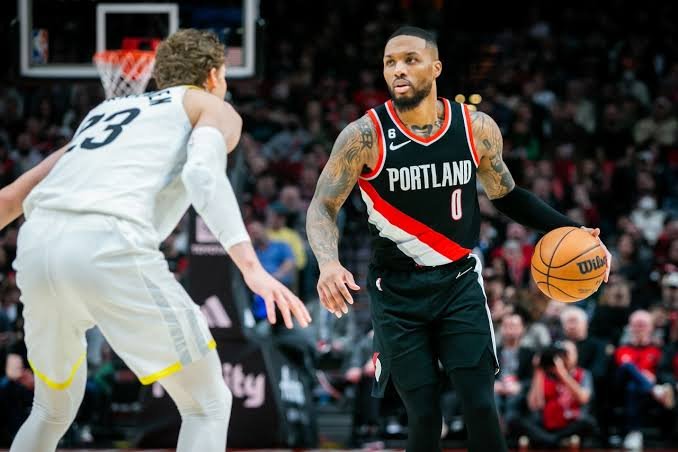
The Portland Trail Blazers vs Utah Jazz match player stats reveal how individual performances, three-point shooting, rebounding, and defensive execution can determine the outcome of a competitive NBA matchup. In their March 13, 2026, meeting at the Moda Center in Portland, the Trail Blazers defeated the Jazz 124–114. Jrue Holiday and Scoot Henderson led Portland with 25 points apiece, while Donovan Clingan contributed 21 points and 15 rebounds. Utah received an outstanding scoring performance from Brice Sensabaugh, who finished with 31 points, but the Jazz could not overcome Portland’s balanced offensive production.
Portland Trail Blazers vs Utah Jazz Match Player Stats: Game Overview
The final score was Portland Trail Blazers 124, Utah Jazz 114. Utah started strongly, scoring 38 points in the first quarter, while Portland managed 28. However, the Trail Blazers responded with a 38-point second quarter, changing the momentum and entering halftime with a stronger position. Portland then maintained its advantage throughout the second half, scoring 29 points in each of the final two quarters.
The ten-point margin reflected Portland’s ability to recover from a difficult opening period and sustain its offensive performance. Portland Trail Blazers vs Utah Jazz match player stats remained productive enough to reach 114 points, but its early lead did not translate into control of the entire contest. Portland’s response showed the importance of maintaining offensive efficiency after an opponent establishes momentum.
Jrue Holiday Sets the Tone for Portland
Jrue Holiday delivered one of Portland’s most complete performances, finishing with 25 points, eight assists, five rebounds, and four three-pointers. His ability to score efficiently while creating opportunities for teammates helped Portland maintain a productive offense even when Utah attempted to regain control.
Holiday’s performance was especially important because he contributed in several different ways. His scoring kept the Jazz from focusing all their defense on Henderson, while his passing created opportunities for other players.
His four made three-pointers also stretched Utah’s defensive coverage. Perimeter threats force defenders to move away from the basket, potentially creating driving lanes and better opportunities for interior players. Holiday’s combination of shooting and playmaking therefore influenced more than just his individual point total.
Scoot Henderson Provides a Major Scoring Boost
Scoot Henderson matched Holiday with 25 points, producing another important performance in Portland’s backcourt. Henderson shot 8-for-14 from the field, made 5-of-7 from three, and hit all 4 of his free throws. He also collected five rebounds, three assists, and one blocked shot.
Nevertheless, his shooting efficiency and scoring volume gave Portland a major advantage. His contribution was not limited to the final points total; he helped create the offensive pressure that kept the Trail Blazers ahead during the decisive portions of the game.
Donovan Clingan Dominates the Rebounding Battle
Donovan Clingan produced one of the strongest individual performances of the matchup, recording 21 points, 15 rebounds, two assists, three steals, and six blocks. He converted seven of 12 field-goal attempts and made all six of his free throws. His 15 rebounds included five offensive boards, giving Portland additional opportunities to score after missed shots.
Offensive rebounds can be especially valuable in games where both teams are scoring frequently. A missed shot does not necessarily end a possession if the attacking team can recover the ball and create another opportunity. Clingan’s five offensive rebounds gave Portland a chance to extend possessions and maintain pressure on Utah’s defense.
His performance also complemented Portland’s guards. Holiday and Henderson supplied much of the perimeter scoring, while Clingan provided an interior option that Utah had to respect. This inside-outside balance gave Portland several ways to generate offense and helped explain why the team reached 124 points.
Deni Avdija Connects Scoring With Playmaking
Deni Avdija contributed 17 points, six rebounds, eight assists, two steals, and one block. He shot seven of nine from the field and made all three of his free throws, finishing with an impressive field-goal percentage of 77.8%. His scoring efficiency and distribution made him another major contributor to Portland’s offensive performance.
His six rebounds added further value by allowing him to contribute outside his primary scoring responsibilities. The two steals also provided evidence of his activity on the defensive end, while his block added another contribution to Portland’s defensive statistics.
Avdija’s performance illustrates why assists, rebounds, and defensive statistics matter when evaluating player impact. A player can influence the game through several categories even without leading the team in points. In this matchup, his balanced contribution helped Portland sustain its advantage.
Brice Sensabaugh Leads Utah With 31 Points
Brice Sensabaugh was the Portland Trail Blazers vs utah jazz match player stats leading scorer, finishing with 31 points, three rebounds, one assist, two steals, and one block. His 63.2% field-goal percentage and 75% accuracy from beyond the arc made his shooting performance one of the most impressive individual displays of the game.
His performance becomes even more interesting when compared with Portland’s two leading scorers. Sensabaugh scored 31 points, six more than either Holiday or Henderson individually. However, the Trail Blazers had two players reach 25 points, as well as Clingan’s 21 and Avdija’s 17.
Isaiah Collier and Cody Williams Support the Jazz Offense
Isaiah Collier finished with 17 points, nine assists, three rebounds, and two steals. He made six of 15 field-goal attempts and converted five of six free throws. His nine assists were particularly important because they showed that Utah had a capable playmaker helping create opportunities for teammates.
However, Collier’s field-goal percentage of 40% indicates that his scoring required more attempts than those of some Portland players. That does not make his contribution unimportant, particularly given his passing responsibilities, but it shows why scoring volume and efficiency should be examined together.
Cody Williams added 19 points and seven rebounds while making seven of 17 field-goal attempts. He also converted five of seven free throws and recorded three assists. His contribution gave Utah another source of scoring beyond Sensabaugh and helped the team remain competitive throughout the contest.
Kyle Filipowski Adds Shooting and Frontcourt Production
Kyle Filipowski supplied 11 points, six rebounds, five assists, and three steals for Utah. He made four of eight field-goal attempts, including three of five from three-point range. His five assists were another indication that the Jazz could create opportunities through players beyond their primary ball handlers.
Filipowski’s perimeter shooting added a useful dimension to Utah’s offense. When a frontcourt player can make outside shots, opposing centers may need to move farther away from the basket. That can create additional space for teammates to attack the lane or find openings around the perimeter.
Portland’s Bench Makes a Meaningful Difference
Portland’s supporting players contributed valuable scoring beyond the performances of Holiday, Henderson, Clingan, and Avdija. Sidy Cissoko scored 14 points, making six of 10 field-goal attempts and two of five three-pointers. His four rebounds, two assists, and one steal provided additional production during his time on the court.
Cissoko’s 14 points were particularly useful because they gave Portland another efficient scoring option. His performance meant the Trail Blazers could receive a substantial contribution from their supporting lineup rather than depending entirely on their leading scorers.
Jerami Grant finished with nine points and three rebounds, shooting three of five from the field and two of four from three-point range. Matisse Thybulle added six points and recorded four steals, demonstrating defensive activity even though his shooting was less efficient.
Team Shooting Statistics Explain Portland’s Advantage
One of the clearest differences in the box score was overall field-goal efficiency. Portland made 46 of 89 field-goal attempts, finishing at 51.7%. Utah converted 42 of 92 attempts, producing a 45.7% field-goal percentage. Although Utah attempted three more shots, Portland made four additional field goals and did so with fewer attempts.
Together, these numbers show that Portland’s advantage did not come from winning every statistical category. Utah shot better from three-point range and made more free throws, but Portland’s overall field-goal efficiency and greater three-point volume helped produce the higher final score.
Rebounds, Assists and Defensive Contributions
Portland finished with 49 total rebounds compared with Utah’s 36, creating a 13-rebound advantage. The Trail Blazers recorded 14 offensive rebounds and 35 defensive rebounds, while the Jazz collected 10 offensive boards and 26 defensive rebounds.
Defensively, Portland recorded 12 blocks and 16 steals. Utah had three blocks and 16 steals. The identical steal totals show that both teams generated defensive plays by taking possession away from their opponents, but Portland’s advantage in blocks was substantial. Clingan’s six blocks alone represented half of Portland’s total.
Turnovers also deserve attention. Portland recorded 24 turnovers, compared with Utah’s 18. This was an area where the Jazz performed better, as they gave the ball away less frequently. Portland’s victory despite committing more turnovers demonstrates how strongly its shooting efficiency, rebounding, and shot-blocking influenced the result.
Quarter-by-Quarter Performance and Momentum Changes
The first quarter belonged to Utah, which scored 38 points against Portland’s 28. The Jazz established an offensive rhythm early, finding opportunities to score through their perimeter players and putting the home team under pressure. Portland’s initial defensive difficulties allowed Utah to build momentum, but the opening period did not determine the final result.
The scoring pattern demonstrates why full-game statistics are more informative than a single quarter’s result. Utah’s 38-point opening period was impressive, but Portland’s ability to respond with an equally productive second quarter while limiting the Jazz to 20 points proved decisive. The Trail Blazers did not need to dominate every remaining period; they needed to build and maintain an advantage.
What the Match Player Stats Reveal About Both Teams
Portland’s victory was built on several complementary strengths. Holiday and Henderson each scored 25 points, Clingan dominated the boards with 15 rebounds, and Avdija combined efficient scoring with eight assists. Cissoko’s 14 points added another important contribution, giving the team scoring depth beyond its leading players.
The biggest difference was Portland’s combined effectiveness across multiple categories. The Trail Blazers shot better overall, collected more rebounds, distributed more assists, and recorded nine more blocks than Utah. These advantages outweighed the Jazz’s stronger three-point percentage and lower turnover count.
For readers reviewing the Portland Trail Blazers vs Utah Jazz match player stats, the central lesson is that no single number completely explains the final score. Sensabaugh was the leading scorer, but Portland had several players deliver high-value performances.
Final Thoughts
The March 13, 2026, matchup ended with Portland defeating Utah 124–114, following a decisive second-quarter comeback. Holiday and Henderson shared the team scoring lead with 25 points each, while Clingan recorded 21 points, 15 rebounds, and six blocks. Avdija’s 17 points and eight assists helped connect the offense, and Cissoko provided an additional 14 points off the bench.
Sensabaugh’s 31-point performance was the standout individual scoring display for Utah, supported by productive outings from Williams, Collier, and Filipowski. However, Portland’s stronger overall field-goal percentage, rebounding advantage, and defensive presence around the rim proved more influential than Utah’s superior three-point accuracy.
Also Read Here: Lakers vs Dallas Mavericks match player stats


1 thought on “Portland Trail Blazers vs Utah Jazz Match Player Stats: Best Individual Displays”