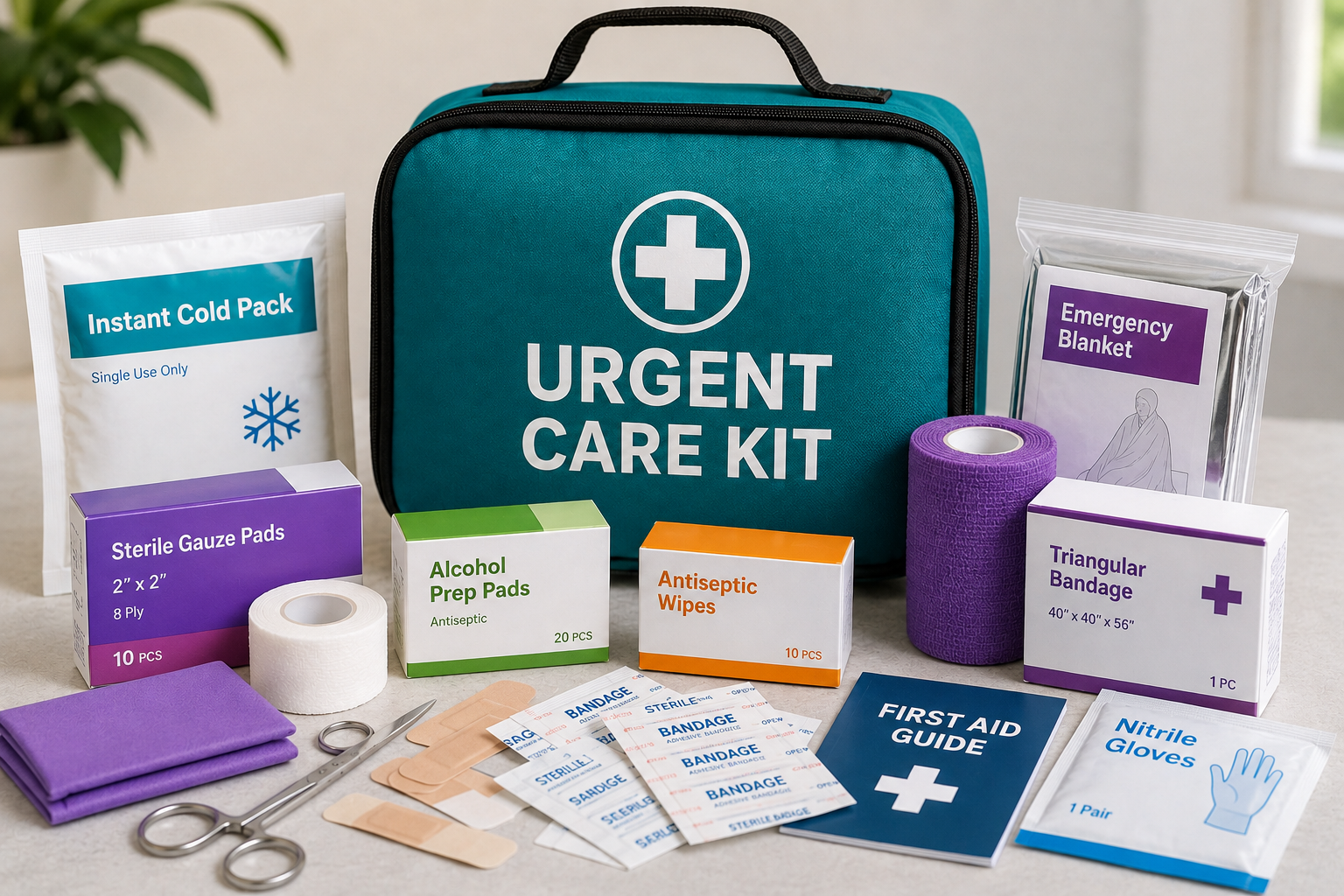
An Urgent Care Kit should contain basic first-aid supplies, appropriate over-the-counter medicines, and important medical information. It can help you handle minor injuries at home, in the car, or while traveling, but it is not a substitute for professional medical care.
What Is an Urgent Care Kit?
An urgent care kit is a practical collection of supplies for responding to everyday health problems before medical attention is available. It may help with small cuts, scrapes, minor burns, sprains, insect bites, and similar situations. A well-organized kit can also save time when you need to clean a wound, cover an injury, or check a temperature. The American Red Cross recommends keeping first-aid supplies at home and in the car, while Mayo Clinic advises tailoring the contents to your household’s needs.
Essential First-Aid Supplies
Start with basic items that are useful for common injuries. Adhesive bandages in different sizes can cover small wounds, while sterile gauze, roller bandages, and medical tape can help with larger areas. Include disposable nonlatex gloves, antiseptic wipes, antibiotic ointment, scissors, tweezers, and an instant cold pack. A non-mercury thermometer and a first-aid instruction guide are also useful additions.
Keep supplies in a clean, organized container so you can find them quickly. A waterproof case is particularly helpful for a vehicle or travel bag. Choose an urgent care kit that matches your needs rather than focusing only on the number of items inside. A smaller, well-stocked kit may be more useful than a large case filled with unnecessary products.
Medicines and Personal Health Items
Some households may benefit from including selected over-the-counter medicines, such as acetaminophen or ibuprofen for pain relief, antihistamines for certain allergic symptoms, and hydrocortisone cream for minor skin irritation. Only include medicines that are appropriate for the people who may use them, and follow the product label or advice from a healthcare professional. Personal medicines that do not require refrigeration may also belong in the kit.
Medication safety matters. Check expiration dates, keep medicines in their original labeled containers, and avoid giving children medicines intended for adults. If someone has a prescribed epinephrine auto-injector, it should be stored according to the prescribing instructions and included in an emergency plan when appropriate.
Emergency Information to Keep Nearby
A useful medical kit should include more than bandages. Add emergency phone numbers, a list of current medicines, known allergies, and relevant medical conditions. You may also want to keep copies of insurance information and important healthcare contacts. These details can help you communicate clearly with medical professionals if an injury or illness becomes more serious.
For families, consider including age-appropriate supplies for children and any special items needed by older adults. If someone uses glasses, hearing aids, or other essential medical equipment, emergency planning should account for those needs. The American Red Cross recommends customizing emergency supplies for each household member.
How to Organize Your Kit
Divide the contents into simple categories, such as wound care, medicines, protective equipment, and emergency information. Label the container clearly and store it somewhere accessible to adults but out of young children’s reach. Everyone in the household should know where it is kept.
You can create separate urgent care kit for different locations. A home kit may contain more supplies, while a car or travel kit can focus on compact essentials. The right setup depends on your activities, family size, and access to medical services.
When to Seek Professional Medical Help
An Urgent Care Kit is designed for minor problems, not serious emergencies. Seek immediate medical help for life-threatening conditions, severe bleeding, difficulty breathing, unconsciousness, or other serious symptoms. Sudden or unexplained chest pain also requires emergency attention rather than home treatment.
For less serious concerns, contact a healthcare professional when symptoms worsen, an injury appears more severe than expected, or you are unsure how to manage it. First-aid guidance can help you respond initially, but it should not replace diagnosis or treatment from a qualified provider.
Check and Replace Supplies Regularly
An urgent care kit is only useful if its contents are ready to use. Check it regularly for expired medicines, damaged packaging, and supplies that have been used. Replace missing items and confirm that any batteries or emergency equipment still work. Mayo Clinic and the American Red Cross both recommend routine checks and replacing outdated or depleted contents.
Conclusion
Preparing an Urgent Care Kit is a simple but valuable step toward handling minor medical problems at home, during travel, or in the car. By keeping essential first-aid supplies, appropriate medicines, and personal health information in one accessible place, you can respond more quickly when everyday injuries occur.
Regularly checking expiration dates and replacing used items ensures your kit remains reliable. However, a first-aid kit has limits, and serious injuries or concerning symptoms should always receive professional medical attention. A little preparation today can make unexpected situations easier to manage tomorrow.
FAQs
What should an Urgent Care Kit contain?
Basic bandages, gauze, tape, gloves, antiseptic supplies, scissors, tweezers, a thermometer, and selected medicines appropriate for your household.
Can I keep an Urgent Care Kit in my car?
Yes. A car first-aid kit can be useful for minor injuries while traveling. Choose a compact kit and check its contents regularly.
How often should I check my kit?
Check it regularly and replace expired, damaged, or used supplies. A routine inspection helps ensure the kit is ready when needed.
When should I call emergency services?
Call your local emergency number for life-threatening conditions, such as severe bleeding, difficulty breathing, unconsciousness, or sudden unexplained chest pain.
Also Read Here: Google Block Breaker

1 thought on “Urgent Care Kit Essentials: How to Prepare for Minor Medical Emergencies”